
Public Asset Control: What PAC Token Really Is


Public Asset Control (PAC) token is a Solana-based crypto token built around a dramatic asset-control narrative. Its website uses a classified government-brief style, references strategic reserves, and presents language around oil, gold, institutions, and sovereign authority. That branding is attention-grabbing, but it should not be confused with verified real-world asset backing.

The important detail is in the project’s own disclaimer. PAC is framed as entertainment and speculation, with no official affiliation or endorsement from the public figures, companies, or government entities mentioned in the site’s theme. In plain terms, Public Asset Control is best treated as a narrative-driven Solana token, not a confirmed institutional asset token.
For readers using WEEX to research new coins, the useful question is not just “what is PAC?” It is whether the contract, liquidity, market structure, and project claims support the level of risk a trader is about to take.
Public Asset Control PAC at a Glance
| Item | Current Reading |
|---|---|
| Token name | Public Asset Control |
| Ticker | PAC |
| Network | Solana |
| Official contract shown | B5xwCQUKfx8BJZsgvuBvW6XgrxtkqLTrDEAYjpLJpump |
| Main trading route shown | PumpSwap / Jupiter-style Solana swap flow |
| Project framing | Asset-control and strategic-reserve narrative |
| Key caution | Official disclaimer says it is speculative and not officially affiliated with named entities |
| Market status | Micro-cap, thin-liquidity, high-volatility token |
What Public Asset Control Claims Versus What It Proves
Public Asset Control’s public branding is designed to look serious. The site references institutional capital, intelligence networks, strategic reserves, petroleum assets, gold reserves, and other national-resource themes. Those references are part of the token’s story.
What is verified is much narrower. PAC has a public Solana contract address, a live DEX market page, and visible on-chain trading activity. What is not verified is the more important financial claim: there is no clear public proof that PAC represents audited oil, gold, government assets, BlackRock backing, Palantir backing, or sovereign support.
That distinction matters. Real-world asset tokens need documentation, custody details, redemption mechanics, legal structure, audits, and clear issuer accountability. PAC’s current public footprint looks much closer to a meme-style or narrative token than a regulated asset-backed product.
How PAC Trades on Solana
PAC behaves like a typical Solana token from a trading perspective. A user needs a Solana-compatible wallet, SOL for transaction costs, and access to a swap route or liquidity pool. Public pages point to Solana DEX infrastructure rather than a traditional centralized order book.
This means the displayed token price is only part of the trade. Liquidity decides whether a buyer can enter or exit without heavy slippage. In a thin pool, even a modest order can move the average execution price away from the number shown on a chart.
That is where inexperienced traders often lose money. They see a tiny unit price and assume the token is “cheap,” but unit price says little without market cap, supply, liquidity, holder distribution, and volume quality.
PAC Market Snapshot and Liquidity Risk
As checked on May 15, 2026, DEX Screener showed PAC around the micro-cap range, with roughly hundreds of thousands of dollars in market capitalization and tens of thousands of dollars in liquidity. Phantom also labels the token as unverified, which is a useful caution signal for anyone interacting through wallet interfaces.
Those numbers can change quickly, so they should not be treated as stable reference points. The better takeaway is structural: PAC trades like a small, volatile Solana token whose market can move sharply when attention rises or fades.
| Risk Area | What To Watch |
|---|---|
| Contract risk | Confirm the exact contract before swapping |
| Liquidity risk | Check whether the pool can absorb your trade size |
| Slippage risk | Review the final quote, not just the chart price |
| Narrative risk | The asset-control story may fade faster than price expectations |
| Verification risk | Do not treat branding as proof of backing |
| Exit risk | Thin markets can make selling harder than buying |
Is Public Asset Control Legit or a Scam?
The cleanest answer is that PAC appears to be a real tradable token on Solana, but that does not make its branding claims financially verified. A token can be real on-chain and still be extremely speculative.
Calling PAC a confirmed scam would require more evidence than public branding alone. Calling it a verified real-world asset token would also require evidence that is not visible in the current public materials. The more accurate reading is that Public Asset Control is a high-risk narrative token with theatrical branding, live market activity, and limited proof of underlying utility.
That is enough to interest short-term traders, but not enough to support a low-risk investment thesis.
How To Evaluate PAC Before Buying
Start with the contract address. For PAC, the official site shows B5xwCQUKfx8BJZsgvuBvW6XgrxtkqLTrDEAYjpLJpump. Match that address across the official page, DEX tracker, wallet, and swap interface before taking any action.
Then check liquidity and recent volume. A chart can look active while the pool is still too shallow for clean execution. If the trade size is large relative to liquidity, the real cost may be worse than expected.
If you want to understand the full process before using a wallet or swap route, read this guide on how to buy Public Asset Control. New users can also review WEEX’s broader guide on how to buy crypto before interacting with small-cap tokens.
Finally, separate story from structure. The Public Asset Control narrative may attract attention, but attention is not the same as collateral, revenue, legal rights, or redemption value. If PAC fits your strategy, treat it as a speculative trade that needs strict sizing and an exit plan.
Final Take
Public Asset Control is best understood as a Solana PAC token with strong asset-control branding, not as a proven government-backed or commodity-backed asset. The project’s own disclaimer is the central fact: the dramatic presentation should be read as narrative, not proof.
For anyone watching PAC, the practical checklist is simple: verify the contract, check live liquidity, understand slippage, avoid assuming real asset backing, and learn the basics of WEEX spot trading before making any trading decision.
FAQ
What is Public Asset Control PAC?
Public Asset Control PAC is a Solana-based crypto token using the ticker PAC. It is marketed with an asset-control and strategic-reserve theme, but its public materials frame it as speculative.
Is PAC backed by BlackRock, Palantir, or government assets?
No verified public evidence confirms that PAC is backed by those entities or by real government reserves. The official disclaimer says the references are not real affiliations or endorsements.
What is the PAC contract address?
The official site shows B5xwCQUKfx8BJZsgvuBvW6XgrxtkqLTrDEAYjpLJpump. Always verify the address before swapping because lookalike tokens can appear.
Where can PAC be traded?
Public market pages show PAC trading through Solana DEX infrastructure, including a PumpSwap market and Jupiter-style swap route.
Is Public Asset Control a good investment?
PAC is a high-risk speculative token. It may appeal to traders who understand micro-cap Solana volatility, but it is not suitable for users expecting verified backing, stable fundamentals, or low-risk exposure.
You may also like
Cerebras Stock: What to Know After the CBRS IPO
Cerebras stock now trades on Nasdaq as CBRS after a $185 IPO. Learn the IPO facts, valuation context, AI-chip story, and key risks.

COAR Coin: What Chinese Oil Asset Reserve Really Is
COAR coin is a new Solana oil-narrative token. Learn what Chinese Oil Asset Reserve claims, how to verify the contract, and key trading risks.

Will PAC Coin Reach $1? PAC Crypto Price Analysis
Will PAC coin reach 1? Current price is 0.000467, 1B supply, 467K marketcap. Here is what 467K marketcap would actually require.
Claude AI helps uncover forgotten Bitcoin fortune worth $400K hidden for 11 years
Claude AI helped recover a Bitcoin wallet lost for 9 years. 5 BTC, $400K. Did AI crack encryption? No. Here is what actually happened.
What Is COAR Crypto? Chinese Oil Asset Reserve (COAR) Coin Explained
What is COAR crypto? Chinese Oil Asset Reserve on Solana. market cap, oil-themed meme token. No real reserves. Learn risks & data inside.
Introducing Superform ($UP): User-Owned Onchain Neobank and Price Prediction
Superform is a user-owned onchain neobank gaining attention from v2 growth, SuperVaults, $UP utility, and WEEX trading.

What Is SAOS Crypto? Can SAOS Hit $0.1?
Is SAOS crypto a hidden gem? Strategic American Oil Supply on Solana explained. No hype, just data: $75K cap, locked LP, RWA narrative.
World Collective Oil Reserve (WCOR) Crypto Price Prediction 2026: Is WCOR a Good Investment
World Collective Oil Reserve (WCOR) crypto price prediction for 2026. We analyze the Solana registry token, on-chain risks, and whether WCOR can break 0.015.

$SUPERFORM Airdrop on WEEX: Complete Guide to SUPERFORM and Claim Free $SUPERFORM
Learn Superform tokenomics, its user-owned neobank ecosystem, and how to claim rewards in the WEEX 50,000 USDT SUPERFORM airdrop before May 21, 2026.
What Is WEEX Token (WXT)? A Complete Guide
WEEX Token (WXT) is the native utility token within the WEEX ecosystem. Its main purpose is to improve the trading experience rather than serve purely as a speculative asset.
In simple terms, WXT is mainly used for fee discounts (the more you hold, the lower your trading fees), staking rewards, and participation in platform events and governance voting. It also allows users to engage more deeply in the WEEX ecosystem, including promotional campaigns and future Web3 integrations.
In terms of acquisition, users can typically buy WXT directly on the WEEX exchange using assets like USDT, or earn it through platform events. For storage, it can be kept in an exchange wallet for convenience or transferred to external wallets (such as cold wallets) for enhanced security.
From a tokenomics and market perspective, WXT’s value is closely tied to WEEX’s user growth, trading volume, and overall crypto market conditions, making it relatively volatile and high-risk. Analysts generally view it as more suitable for users interested in the long-term development of the platform rather than short-term speculation.
Overall, WXT is a “trading utility token” that enhances user experience through fee discounts, staking benefits, and eco
What is World Cup Doge (WCDOGE) Coin? Is WCDOGE a Good Investment?
What is WCDOGE crypto? Meme token or football fan play? Real data, honest risks, and how to buy World Cup Doge.
SIM Owner Details: Legal PTA Check and Safety Guide
Learn what SIM owner details means, how to check SIMs on your CNIC through official PTA channels, and how to avoid lookup scams.
NBIS Stock: What Nebius’ AI Cloud Surge Means Now
NBIS stock jumped as Nebius reported rapid AI cloud growth. See the key Q1 2026 numbers, catalysts, valuation risks, and what to watch next.

WXT Bounty Hunter Program Explained: Earn Crypto Rewards While Learning to Trade on WEEX
The WXT Bounty Hunter Program is a WEEX campaign running from May 8 to May 18, 2026, designed to help beginners learn crypto trading while earning rewards.
Users complete simple tasks like depositing USDT, trading WXT, and holding tokens to receive WXT rewards. New users can earn bonuses such as 200 WXT, while advanced users can compete for larger rewards based on trading activity, including a 100,000 WXT prize pool.
The program uses net metrics (deposits and buys minus withdrawals) to ensure fairness and excludes institutional trading. Holding 300 WXT also unlocks extra benefits like enhanced airdrops.
Overall, it combines learning and earning, making it an entry point into crypto trading on WEEX.

Grass Token Price: GRASS Live Data, Drivers, and Risks
Track Grass token price, market cap, supply, unlocks, and key GRASS price drivers before trading the Solana AI and DePIN token.

WCOR Coin Explained: World Collective Oil Reserve on Solana
WCOR coin is a Solana token tied to an oil-reserve registry narrative. Here’s what it claims, current data, and the risks traders should watch.
What Is SAOS Crypto? Can SAOS Hit $0.1?
Is SAOS crypto a hidden gem? Strategic American Oil Supply on Solana explained. No hype, just data: $75K cap, locked LP, RWA narrative.
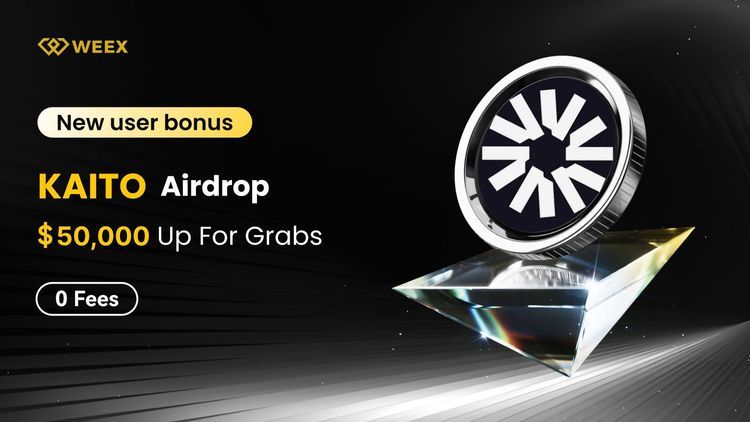
KAIO Airdrop: Share 50,000 USDT on WEEX with 0-Fee Trading
Trade KAIO/USDT with 0 fees on WEEX from May 7–14, 2026. New users can complete deposit and spot trading tasks to share 50,000 USDT in rewards.
Cerebras Stock: What to Know After the CBRS IPO
Cerebras stock now trades on Nasdaq as CBRS after a $185 IPO. Learn the IPO facts, valuation context, AI-chip story, and key risks.
COAR Coin: What Chinese Oil Asset Reserve Really Is
COAR coin is a new Solana oil-narrative token. Learn what Chinese Oil Asset Reserve claims, how to verify the contract, and key trading risks.
Will PAC Coin Reach $1? PAC Crypto Price Analysis
Will PAC coin reach 1? Current price is 0.000467, 1B supply, 467K marketcap. Here is what 467K marketcap would actually require.
Claude AI helps uncover forgotten Bitcoin fortune worth $400K hidden for 11 years
Claude AI helped recover a Bitcoin wallet lost for 9 years. 5 BTC, $400K. Did AI crack encryption? No. Here is what actually happened.
What Is COAR Crypto? Chinese Oil Asset Reserve (COAR) Coin Explained
What is COAR crypto? Chinese Oil Asset Reserve on Solana. market cap, oil-themed meme token. No real reserves. Learn risks & data inside.
Introducing Superform ($UP): User-Owned Onchain Neobank and Price Prediction
Superform is a user-owned onchain neobank gaining attention from v2 growth, SuperVaults, $UP utility, and WEEX trading.


