
Enjin Coin Price Prediction 2026: Realistic ENJ Outlook
Enjin Coin price prediction 2026 is no longer a pure nostalgia trade. As of April 16, 2026, ENJ is changing hands near $0.0805, with roughly $665.6 million in 24-hour volume and a market cap around $159.9 million. That tells you two things at once: traders are back, but the token is still priced like a smaller gaming name rather than a market leader.
ENJ needs a return to its old peak to work as a trade in 2026, but I also do not think the old all-time high is a useful anchor for this cycle. Base case for the end of 2026 is $0.10 to $0.18. Bull case is $0.22 to $0.35. Bear case is $0.03 to $0.06. The real question is whether Enjin can turn product activity, staking demand, and game-driven item demand into a durable bid instead of another short squeeze that fades after headlines cool.
What Is Enjin Coin and Why Does It Still Matter?
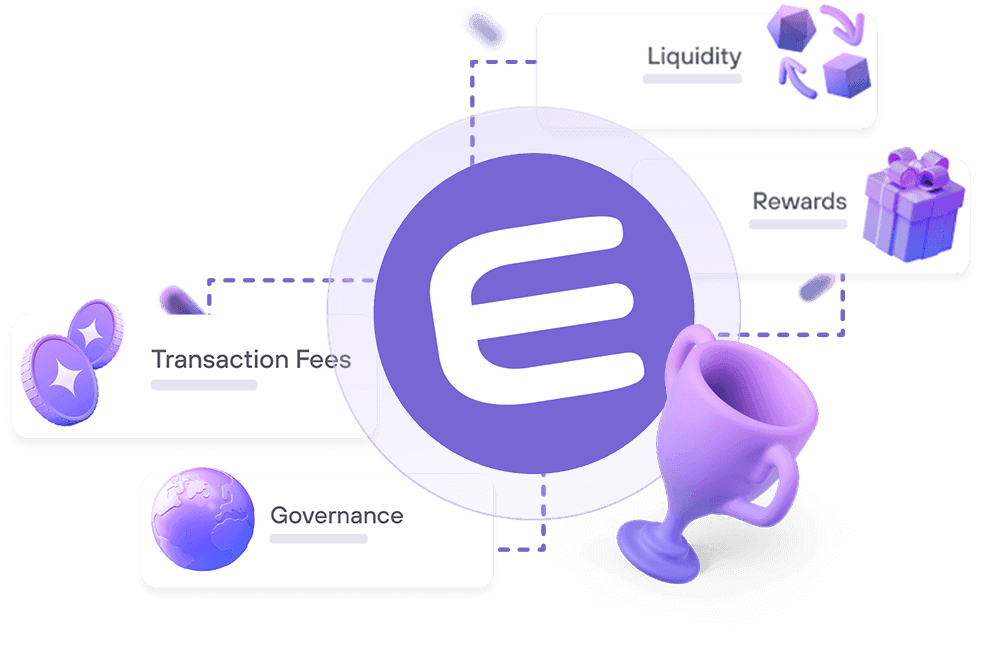
Enjin Coin, or ENJ, is the native coin of the Enjin Blockchain. It is used for transaction fees, storage deposits, governance, staking, and ENJ infusion inside on-chain game items. That last part matters more than most casual traders realize. ENJ is not just a ticker. It is also the backing asset that can be locked inside multi-tokens and later recovered by melting them.
That design gives ENJ a different profile from many gaming tokens. Unlike Bitcoin, which trades primarily as macro collateral, or Ethereum Classic, which often trades on legacy-chain beta, ENJ still depends on whether developers and players use the chain for items, rewards, and marketplace activity. If that usage rises, ENJ has a cleaner demand story. If that usage stays flat, the price leans harder on speculation.
Enjin still matters in 2026 because it kept building while the market stopped paying attention. The chain moved from its earlier Ethereum-era setup to its own Substrate-based network, continued staking development, and kept pushing the Multiverse campaign structure that ties game activity to ENJ-backed rewards. That does not guarantee upside. It does mean there is a live product story underneath the chart.
How It Works: What Actually Moves ENJ Price in 2026
The easiest mistake in any ENJ price prediction is to focus only on the chart. ENJ has four live drivers in 2026.
First, ENJ is the working asset for fees and item creation on the chain. Enjin documentation states that ENJ is used to pay gas, storage deposits, and infusion into multi-tokens. If more games mint items or players trade more frequently, ENJ gets more utility than a simple reward token.
Second, staking absorbs part of the available float, but it does not erase dilution. Enjin's published tokenomics update says annual inflation is about 4.8927482%. That inflation supports validators and governance, so the token is not a hard-cap scarcity asset in the way many older traders still imagine. At the same time, staking can still help reduce immediate sell pressure if holders decide yield plus governance access is worth more than instant liquidity.
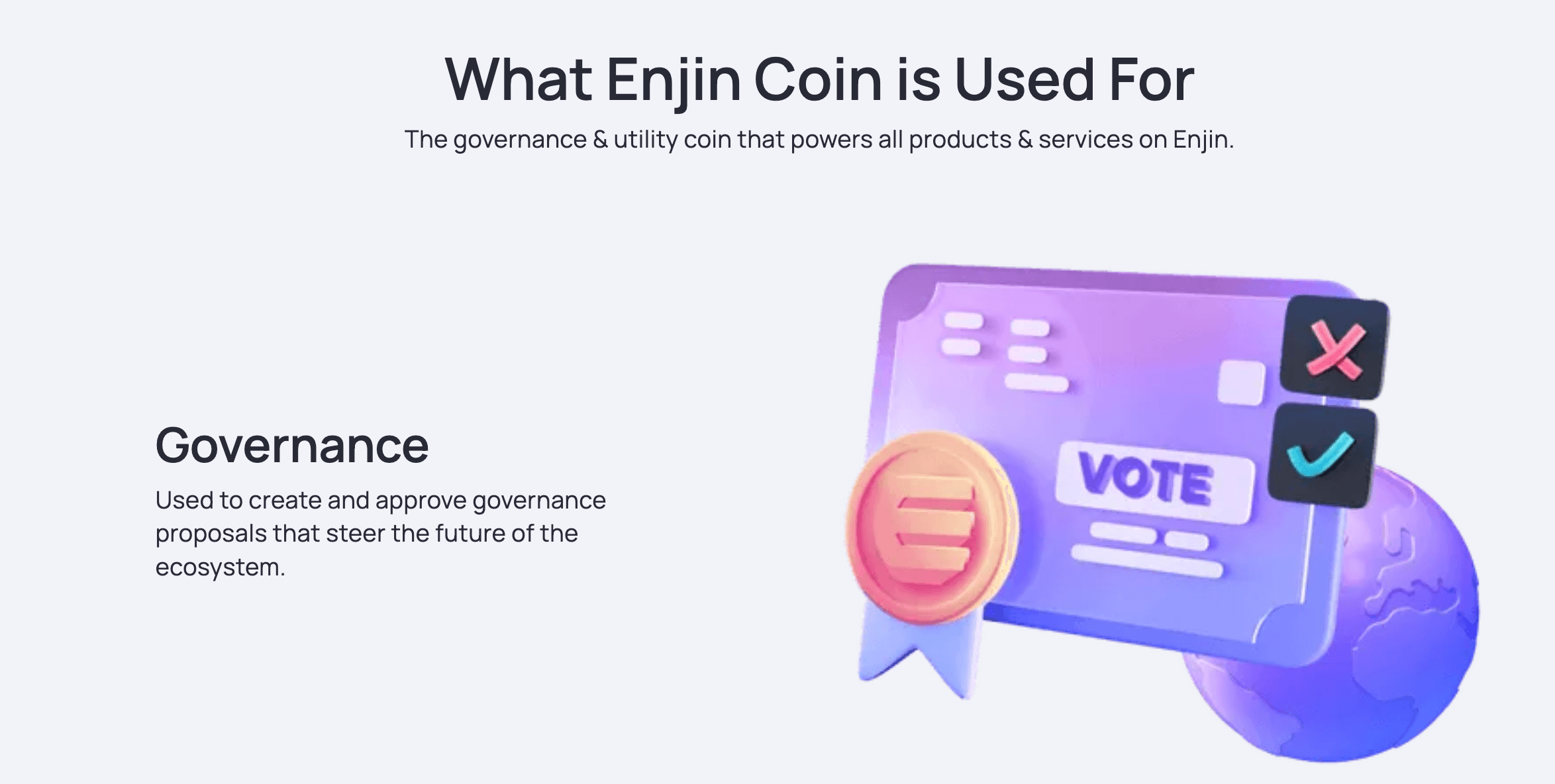
Third, product upgrades matter because ENJ is tied to the chain's operating quality. The Kallang upgrade was announced on April 15, 2026, with Enjin mainnet enactment scheduled for May 16, 2026. Governance and infrastructure work rarely creates a vertical rally on its own, but it can defend valuation if it removes operational friction and improves trust in the chain's long-term direction.
Fourth, game demand has to be real enough to matter. Essence of the Elements began on February 3, 2026 as a year-long Multiverse campaign. Enjin says each season allocates 50,000 ENJ across Blob rewards, which means 200,000 ENJ is attached to the full year of seasonal prize flow. That does not sound huge against a nearly 2 billion token base, but it does matter because it creates visible reasons for users to hold, earn, and interact with ENJ-backed items instead of treating the token as dead gaming luggage from the last cycle.
What the Market Is Already Pricing In
| Signal | Why It Matters for ENJ |
|---|---|
| ENJ traded near $0.0805 on April 16, 2026 | The token is still cheap in absolute terms, which makes percentage moves look dramatic even when market cap stays modest. |
| Seven-day price change of 127.1% | Traders are clearly rotating back into gaming names, but that kind of speed often brings profit-taking risk. |
| 24-hour volume near $665.6 million | Volume is high enough to attract momentum traders, though not all of that flow is conviction buying. |
| Kallang mainnet date set for May 16, 2026 | A visible roadmap milestone gives bulls something concrete to point at. |
| 50,000 ENJ per season in Element rewards | This is one of the clearest product-linked demand signals Enjin has shown in 2026. |
The harsh reality: none of these examples alone justifies a multi-dollar ENJ target in 2026. They do justify a repricing from depressed levels if usage, staking, and game participation keep improving together.
Enjin Coin Price Prediction 2026: Three Scenarios
| Scenario | End-2026 ENJ Range | Approx. Market Cap Range | What Has to Go Right or Wrong |
|---|---|---|---|
| Bear case | $0.03 to $0.06 | About $57M to $114M | The April burst fades, gaming-token rotation cools, and ENJ slips back into low-attention trading. |
| Base case | $0.10 to $0.18 | About $190M to $342M | Kallang rolls out cleanly, staking stays sticky, and game activity remains healthy without turning explosive. |
| Bull case | $0.22 to $0.35 | About $418M to $665M | GameFi risk appetite stays hot, Enjin usage improves, and larger venues add enough liquidity to keep momentum alive. |
Why these ranges? Because ENJ no longer has the tiny float that once let traders dream easily. With roughly 1.9 billion ENJ in circulation and a total supply that sits near 1.98 billion, even a move to $0.35 already implies a serious rerating. A move back to $1 would push ENJ toward roughly a $1.9 billion market cap. That is possible in a broad alt mania, but it is too aggressive for a base forecast unless Enjin lands a clear adoption breakout that is not visible yet.
This is also why I would not anchor on the old $4.82 peak. At today's supply profile, that kind of price would imply a valuation far beyond what current product demand can defend. Bitcoin Gold and Ethereum Classic both show how legacy name recognition can keep a token relevant, but legacy branding alone rarely rebuilds an old peak.
What Could Defend the Bull Case
The bullish case is not crazy. It just needs more than memes.
One support is product-linked demand. ENJ is still one of the cleaner gaming-token structures because it can be infused into items and later recovered through melting. That mechanism is more tangible than the usual "community rewards" language that fills many smaller GameFi coins.
Another support is staking. If users continue bonding ENJ and treating sENJ as a useful claim rather than a temporary parking spot, the market gets a tighter effective float. That does not eliminate volatility, but it can defend the price better than a token with no reason to stay off exchanges.
The third support is execution. A clean Kallang rollout, continued governance participation, and more game activity across the Multiverse would tell the market that Enjin is still shipping. In small-to-mid cap tokens, functioning roadmaps still matter.
What Could Prevent a Bigger Rally
The first problem is supply math. ENJ is not a low-float coin anymore. Inflation still exists, and a large tradable base makes it harder to squeeze the token into absurd prices for long.
The second problem is that game-token attention is fickle. Even when users return, they often chase whichever ticker is moving fastest. Unlike Bitcoin, ENJ does not have a macro reserve narrative to catch it when risk appetite disappears.
The third problem is operational friction. Native-chain migrations, wallet steps, exchange maintenance windows, and staking mechanics are all manageable for crypto-native users, but they still create drop-off.
The fourth problem is valuation discipline. When a token rallies 100%+ in a week from a low base, the chart starts pulling in late buyers who confuse velocity with proof.
Final View
Enjin Coin price prediction 2026 should stay grounded in market cap, not nostalgia. ENJ has a live product base, real staking mechanics, active game-linked campaigns, and another visible chain upgrade on deck. Those are real positives.
But the upside is easier to defend at $0.10 to $0.35 than at $1 or more. For ENJ to break far above that range in 2026, it likely needs a much broader GameFi rerating, stronger exchange depth, and clearer signs that item activity is translating into durable token demand.
FAQ
Is Enjin Coin a good investment in 2026?
It can be a credible high-risk altcoin trade, but not a low-risk core holding.
Can ENJ reach $1 in 2026?
Possible, but aggressive. At current supply, that implies roughly a $1.9B market cap.
Why does staking matter?
Because it can reduce immediate selling pressure, though it does not remove inflation or execution risk.
What breaks the bull case?
A failed roadmap rollout, weak game participation, or a broad collapse in gaming-token liquidity.
Rendered from the updated article draft here
You may also like

What Is WEEX Token (WXT)? A Complete Guide
WEEX Token (WXT) is the native utility token within the WEEX ecosystem. Its main purpose is to improve the trading experience rather than serve purely as a speculative asset.
In simple terms, WXT is mainly used for fee discounts (the more you hold, the lower your trading fees), staking rewards, and participation in platform events and governance voting. It also allows users to engage more deeply in the WEEX ecosystem, including promotional campaigns and future Web3 integrations.
In terms of acquisition, users can typically buy WXT directly on the WEEX exchange using assets like USDT, or earn it through platform events. For storage, it can be kept in an exchange wallet for convenience or transferred to external wallets (such as cold wallets) for enhanced security.
From a tokenomics and market perspective, WXT’s value is closely tied to WEEX’s user growth, trading volume, and overall crypto market conditions, making it relatively volatile and high-risk. Analysts generally view it as more suitable for users interested in the long-term development of the platform rather than short-term speculation.
Overall, WXT is a “trading utility token” that enhances user experience through fee discounts, staking benefits, and eco

What is World Cup Doge (WCDOGE) Coin? Is WCDOGE a Good Investment?
What is WCDOGE crypto? Meme token or football fan play? Real data, honest risks, and how to buy World Cup Doge.

SIM Owner Details: Legal PTA Check and Safety Guide
Learn what SIM owner details means, how to check SIMs on your CNIC through official PTA channels, and how to avoid lookup scams.
NBIS Stock: What Nebius’ AI Cloud Surge Means Now
NBIS stock jumped as Nebius reported rapid AI cloud growth. See the key Q1 2026 numbers, catalysts, valuation risks, and what to watch next.

WXT Bounty Hunter Program Explained: Earn Crypto Rewards While Learning to Trade on WEEX
The WXT Bounty Hunter Program is a WEEX campaign running from May 8 to May 18, 2026, designed to help beginners learn crypto trading while earning rewards.
Users complete simple tasks like depositing USDT, trading WXT, and holding tokens to receive WXT rewards. New users can earn bonuses such as 200 WXT, while advanced users can compete for larger rewards based on trading activity, including a 100,000 WXT prize pool.
The program uses net metrics (deposits and buys minus withdrawals) to ensure fairness and excludes institutional trading. Holding 300 WXT also unlocks extra benefits like enhanced airdrops.
Overall, it combines learning and earning, making it an entry point into crypto trading on WEEX.

Grass Token Price: GRASS Live Data, Drivers, and Risks
Track Grass token price, market cap, supply, unlocks, and key GRASS price drivers before trading the Solana AI and DePIN token.
WCOR Coin Explained: World Collective Oil Reserve on Solana
WCOR coin is a Solana token tied to an oil-reserve registry narrative. Here’s what it claims, current data, and the risks traders should watch.

What Is SAOS Crypto? Can SAOS Hit $0.1?
Is SAOS crypto a hidden gem? Strategic American Oil Supply on Solana explained. No hype, just data: $75K cap, locked LP, RWA narrative.

KAIO Airdrop: Share 50,000 USDT on WEEX with 0-Fee Trading
Trade KAIO/USDT with 0 fees on WEEX from May 7–14, 2026. New users can complete deposit and spot trading tasks to share 50,000 USDT in rewards.

What Is SAOS? Strategic American Oil Supply Token Explained
SAOS is a meme token on Solana with a 75,000 USD market cap and 22,000 USD locked liquidity, positioned around oil supply themes but lacking real asset backing
It thrives on pure narrative speculation, with no utility, website, or doxxed team, making it highly volatile and attention-dependent
Traders should distinguish SAOS from legitimate real-world asset projects, as its branding is speculative rather than substantive
Positive aspects include locked liquidity reducing rug pull risks, but low trading activity signals high uncertainty

How to Buy Public Asset Control (PAC) Token in 2026: Latest Solana Buying Guide
How to buy Public Asset Control (PAC) token in 2026, PAC contract address, Solana wallet setup, Jupiter swap guide, latest price, liquidity, and risks.

What Is Public Asset Control (PAC) Token and How Does It Work? Latest Solana PAC Token Guide
Public Asset Control (PAC) token explained. Learn what PAC is, how it works on Solana, current price snapshot, risks, and buying basics.

Can PAC Coin Reach $1 Soon? Analyzing Public Asset Control
PAC is a Solana-based meme token with a government-themed narrative, but it is highly speculative.
At its current price (~$0.0009) and 1B supply, reaching $1 would require a $1B market cap, which is very unlikely.
Short-term moves to $0.001 or $0.01 are more realistic, but the token is highly volatile due to low liquidity and hype-driven trading.
Overall, $1 is not a realistic target, and PAC is better suited for short-term speculation than long-term investment.

United Nations Oil Reserve (UNOS) Crypto: Solana Token, UN Links, and Risks
United Nations Oil Reserve (UNOS) Crypto explained: Solana token basics, UN links, oil-backing claims, market risks, contract checks, and buying cautions.

What Is Public Asset Control (PAC) Coin? Explained for Beginners
Public Asset Control (PAC) is a Solana-based token that uses a “government asset control” narrative involving oil and gold themes, but it has no verified ties to any real institutions or governments. It is mainly an entertainment-focused, speculative meme coin.
The project’s claims about links to entities like BlackRock or Palantir are unverified, and its own disclaimer states it is not a real financial or institutional asset. Like many new Solana tokens, PAC is highly volatile, with low liquidity and limited transparency, including no fully verified audit.
Overall, PAC is a high-risk speculative token driven by hype and storytelling rather than real utility. Beginners are advised to be cautious, verify contract details, and prioritize risk control before considering any trading.
What Is Official Saudi Oil Reserve (OSOR) Coin?
Learn what OSOR coin is, why its Saudi oil narrative matters, how to verify the contract, and what risks to check before trading.

Global Digital Oil Reserve (GDOR): What It Is, Risks, and How to Check It
Global Digital Oil Reserve (GDOR) is an oil-themed Solana token with unclear backing. Learn its risks, market data, and verification checklist.

Is OBC Crypto a Good Investment?
Is OBC crypto a good investment? We analyze the latest market data, holder concentration, liquidity risks, and short-term momentum. Read this before you invest in OBC token.
What Is WEEX Token (WXT)? A Complete Guide
WEEX Token (WXT) is the native utility token within the WEEX ecosystem. Its main purpose is to improve the trading experience rather than serve purely as a speculative asset.
In simple terms, WXT is mainly used for fee discounts (the more you hold, the lower your trading fees), staking rewards, and participation in platform events and governance voting. It also allows users to engage more deeply in the WEEX ecosystem, including promotional campaigns and future Web3 integrations.
In terms of acquisition, users can typically buy WXT directly on the WEEX exchange using assets like USDT, or earn it through platform events. For storage, it can be kept in an exchange wallet for convenience or transferred to external wallets (such as cold wallets) for enhanced security.
From a tokenomics and market perspective, WXT’s value is closely tied to WEEX’s user growth, trading volume, and overall crypto market conditions, making it relatively volatile and high-risk. Analysts generally view it as more suitable for users interested in the long-term development of the platform rather than short-term speculation.
Overall, WXT is a “trading utility token” that enhances user experience through fee discounts, staking benefits, and eco
What is World Cup Doge (WCDOGE) Coin? Is WCDOGE a Good Investment?
What is WCDOGE crypto? Meme token or football fan play? Real data, honest risks, and how to buy World Cup Doge.
SIM Owner Details: Legal PTA Check and Safety Guide
Learn what SIM owner details means, how to check SIMs on your CNIC through official PTA channels, and how to avoid lookup scams.
NBIS Stock: What Nebius’ AI Cloud Surge Means Now
NBIS stock jumped as Nebius reported rapid AI cloud growth. See the key Q1 2026 numbers, catalysts, valuation risks, and what to watch next.
WXT Bounty Hunter Program Explained: Earn Crypto Rewards While Learning to Trade on WEEX
The WXT Bounty Hunter Program is a WEEX campaign running from May 8 to May 18, 2026, designed to help beginners learn crypto trading while earning rewards.
Users complete simple tasks like depositing USDT, trading WXT, and holding tokens to receive WXT rewards. New users can earn bonuses such as 200 WXT, while advanced users can compete for larger rewards based on trading activity, including a 100,000 WXT prize pool.
The program uses net metrics (deposits and buys minus withdrawals) to ensure fairness and excludes institutional trading. Holding 300 WXT also unlocks extra benefits like enhanced airdrops.
Overall, it combines learning and earning, making it an entry point into crypto trading on WEEX.
Grass Token Price: GRASS Live Data, Drivers, and Risks
Track Grass token price, market cap, supply, unlocks, and key GRASS price drivers before trading the Solana AI and DePIN token.