
Claim Free Meteora (MET) Airdrop by May 2025: A Complete Beginner’s Guide Worth $XX



Back in late 2023, I earned over $800 in token rewards just by providing liquidity to an early DeFi project—no upfront hype, no complex tasks. Fast forward to today, and I’m eyeing an even better opportunity: the upcoming Meteora (MET) airdrop. After digging through project docs, testing the points farming system, and confirming eligibility details directly on the Meteora site, I believe this airdrop could be one of the most rewarding of early 2025. In this guide, I want to walk you through it, step by step—especially if you’re new to crypto airdrops.
What Is the Meteora (MET) Airdrop?
The Meteora (MET) airdrop is a limited-time opportunity for crypto users to earn free $MET tokens by participating in liquidity mining and staking activities on Meteora’s platform. Based on the official proposal in the Meteora documentation, 10% of the total token supply is earmarked for early contributors—including airdrop participants.
Meteora is a decentralized liquidity infrastructure protocol built on Solana. Its main goal is to provide sustainable liquidity through points-based farming, real yield vaults, and integrations with on-chain DeFi applications. It has not yet conducted a public token sale or raised capital, and there are no VCs listed at the time of writing (as of October 16, 2025) [source: CryptoRank Drop Hunting].
The project is currently running an extended campaign rewarding users with “points,” which will later convert into $MET tokens. While the final token valuation isn’t official yet, past Solana-based airdrops like Jito and Jupiter delivered between $200–$1000+ worth of free tokens—so the potential here is real.
How to Participate in the Meteora (MET) Airdrop
Participating in the airdrop doesn’t take much—just around $4 in SOL and 20–25 minutes of your time. Here’s what I personally did to get started (and what you can do too):
1. Connect to the Meteora App
Go to [https://app.meteora.ag/](https://app.meteora.ag/) and connect your Solana-compatible wallet. I used Phantom, but you can also use Solflare, Backpack, or Glow.
2. Add Liquidity to a Pool
Once on the platform, head to the “Pools” section. Choose a supported liquidity pool—like USDC/SOL or mSOL/SOL. Depending on your budget, start with at least $1, although I found $10–$20 gives better visibility in farm dashboards.
Why this matters: You earn 1 point per day for every $1 deposited and 1000 points for every $1 in fees earned, according to Meteora’s [stimulus proposal](https://docs.meteora.ag/the-massive-meteora-stimulus-package/3.-the-10-stimulus-proposal).
3. Stake LP Tokens in Farms
After providing liquidity, go to the [Farm tab](https://app.meteora.ag/farms) to deposit your LP (liquidity provider) tokens. This activates the farming phase, where you’re actually collecting points.
You can also explore the [Vaults tab](https://app.meteora.ag/vaults) if you prefer semi-passive yield, although rewards may differ depending on strategies deployed.
4. Check Your Airdrop Points
After 24 hours, visit [https://app.meteora.ag/points](https://app.meteora.ag/points) to verify your point balance. This step is key, as only those with qualifying points will likely be eligible during the airdrop snapshot.
As of October 2025, Season 1 point checking is live, and more seasons may be introduced based on core contributor updates on Meteora’s official Twitter/X account [source](https://x.com/MeteoraAG/status/1950922971125780734).
5. Keep Up With Task Deadlines
So far, no hard deadlines have been published. But based on historical timelines for Solana airdrops, point farming often wraps up within 6–8 months. I recommend completing your deposit tasks by March 2025 to be safe.
Why Join the Meteora (MET) Airdrop?
Let’s talk potential upside. If you’re wondering whether it’s worth your $4 and 24 minutes, here’s what makes this airdrop stand out.
1. Earning Yield + Airdrop = Double Rewards
You’re not just farming free tokens; you’re also earning yield on your assets. This “real yield plus airdrop” combo was a winning strategy in past airdrops from projects like Kujira and Cosmos-based Archway.
2. Solana-Specific Momentum
Meteora is built on Solana—a network that has seen massive recoveries in on-chain activity. According to Messari’s Q3 2025 report, Solana processes over 600k daily active addresses and ranks among the top three L1s for DeFi TVL growth [source: Messari State of Solana Q3 2025].
This growing ecosystem boosts exposure for Meteora and could increase eventual token demand.
3. Proven Model, Familiar Success
Projects like Jito and Jupiter launched similar point-based campaigns before airdropping tokens that yielded thousands for early users. Several of my friends, including one who only deposited $500 in Jito’s program, ended up with $2,200 worth of tokens in early 2024.
Could MET perform the same? There are no guarantees, but the structure is aligning closely.
Risks and Precautions for MET Airdrop Participants
While Meteora’s campaign looks legitimate, there are always risks in testing or participating in early airdrop programs. Here’s what I’ve learned to watch out for:
1. Fake Lookalike Sites
Double-check the site URL: it must be app.meteora.ag. Scam sites often mimic branding but hijack wallets. Stick to links from Meteora’s official [Twitter](https://x.com/MeteoraAG) or [Docs](https://docs.meteora.ag).
2. Wallet Hygiene
Use a dedicated wallet for farming and testing purposes. Don’t store large amounts of assets in farming wallets, especially when interacting with early-stage protocols.
3. Paid Tasks Can Be Risky
This airdrop only requires a few dollars in SOL for gas and liquidity provision. That’s reasonable. But always avoid tasks that require large commitments or pre-sale “fees.”
4. No Guaranteed Rewards
Since this is a speculative airdrop, you might get zero MET in the end. However, you’re still earning yield and building on-chain history, which has long-term value across DeFi platforms.
Frequently Asked Questions (FAQs)
1. What is the Meteora (MET) token?
MET is the upcoming native token of the Meteora protocol. It will reward users for liquidity contributions and governance participation.
2. How much can I earn from the airdrop?
Exact token amounts are unknown. However, 10% of total supply is allocated to liquidity miners and early participants, based on your total point accumulation.
3. Is there a deadline to farm MET points?
Not officially set, but early participation is recommended. Farming began in July 2025 and may close by March–May 2025.
4. Is Meteora backed by any VC funds?
As of October 16, 2025, no funding rounds have been announced. It appears to be organically community-driven so far.
5. Can I claim this airdrop without spending money?
No. You need to deposit at least ~$1 in liquidity and pay transaction fees (about $3–4 in SOL).
6. Is the MET token tradable yet?
No. MET is currently unreleased. Expect token generation event details after farming concludes.
7. Will this airdrop be listed on WEEX exchange?
There’s no official confirmation yet, but given WEEX’s aggressive airdrop listings (such as BLAST and MAV in 2025), it’s a likely candidate post-token launch.
8. Can I participate from any country?
Yes, where Solana wallets and DEXs are permitted. U.S. participants should be cautious and consult local regulations.
9. What other projects are similar to Meteora?
You could also look into GRVT—a promising upcoming zkSync-based exchange rumored to have an airdrop. It’s not the same category but follows a similar community-driven points incentive model.
10. Where can I track my rewards?
Connect your wallet at [https://app.meteora.ag/points](https://app.meteora.ag/points) to check seasonally updated point balances.
Final Thoughts
Meteora’s airdrop campaign is one of the clearest, most accessible DeFi opportunities for anyone starting with under $10. With a transparent points-to-token model, no centralized signup, and generous allocation for early users, it sets a benchmark for how Solana-native protocols can distribute value fairly.
I’ve personally staked, checked my wallet status, and will be increasing my liquidity slightly ahead of the final snapshot—purely based on how promising this project looks, especially with GRVT and other Solana-based airdrops heating up the space.
If you’re looking for your next smart airdrop move, I’d keep Meteora in your top three. Just stay alert, track your points, and get your wallet ready for what could be a sizable payout in spring 2025.
Let’s farm smart—and free.
—
Data extracted from CryptoRank Drop Hunting — as of October 16, 2025, 13:40:38.
You may also like
What Is WEEX Token (WXT)? A Complete Guide
WEEX Token (WXT) is the native utility token within the WEEX ecosystem. Its main purpose is to improve the trading experience rather than serve purely as a speculative asset.
In simple terms, WXT is mainly used for fee discounts (the more you hold, the lower your trading fees), staking rewards, and participation in platform events and governance voting. It also allows users to engage more deeply in the WEEX ecosystem, including promotional campaigns and future Web3 integrations.
In terms of acquisition, users can typically buy WXT directly on the WEEX exchange using assets like USDT, or earn it through platform events. For storage, it can be kept in an exchange wallet for convenience or transferred to external wallets (such as cold wallets) for enhanced security.
From a tokenomics and market perspective, WXT’s value is closely tied to WEEX’s user growth, trading volume, and overall crypto market conditions, making it relatively volatile and high-risk. Analysts generally view it as more suitable for users interested in the long-term development of the platform rather than short-term speculation.
Overall, WXT is a “trading utility token” that enhances user experience through fee discounts, staking benefits, and eco
What is World Cup Doge (WCDOGE) Coin? Is WCDOGE a Good Investment?
What is WCDOGE crypto? Meme token or football fan play? Real data, honest risks, and how to buy World Cup Doge.
SIM Owner Details: Legal PTA Check and Safety Guide
Learn what SIM owner details means, how to check SIMs on your CNIC through official PTA channels, and how to avoid lookup scams.
NBIS Stock: What Nebius’ AI Cloud Surge Means Now
NBIS stock jumped as Nebius reported rapid AI cloud growth. See the key Q1 2026 numbers, catalysts, valuation risks, and what to watch next.

WXT Bounty Hunter Program Explained: Earn Crypto Rewards While Learning to Trade on WEEX
The WXT Bounty Hunter Program is a WEEX campaign running from May 8 to May 18, 2026, designed to help beginners learn crypto trading while earning rewards.
Users complete simple tasks like depositing USDT, trading WXT, and holding tokens to receive WXT rewards. New users can earn bonuses such as 200 WXT, while advanced users can compete for larger rewards based on trading activity, including a 100,000 WXT prize pool.
The program uses net metrics (deposits and buys minus withdrawals) to ensure fairness and excludes institutional trading. Holding 300 WXT also unlocks extra benefits like enhanced airdrops.
Overall, it combines learning and earning, making it an entry point into crypto trading on WEEX.

Grass Token Price: GRASS Live Data, Drivers, and Risks
Track Grass token price, market cap, supply, unlocks, and key GRASS price drivers before trading the Solana AI and DePIN token.

WCOR Coin Explained: World Collective Oil Reserve on Solana
WCOR coin is a Solana token tied to an oil-reserve registry narrative. Here’s what it claims, current data, and the risks traders should watch.
What Is SAOS Crypto? Can SAOS Hit $0.1?
Is SAOS crypto a hidden gem? Strategic American Oil Supply on Solana explained. No hype, just data: $75K cap, locked LP, RWA narrative.
KAIO Airdrop: Share 50,000 USDT on WEEX with 0-Fee Trading
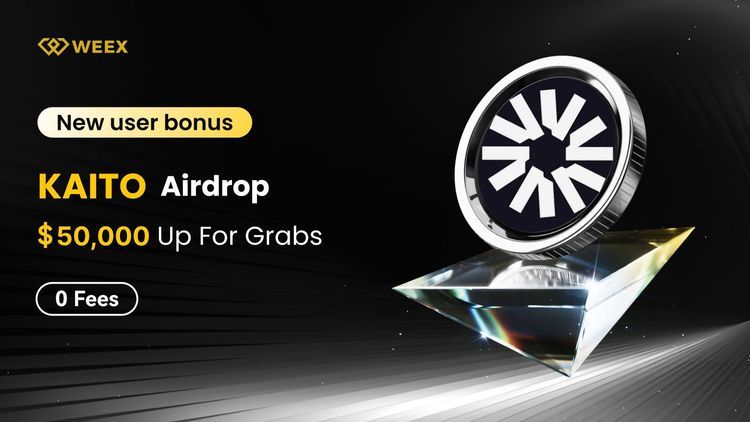
Trade KAIO/USDT with 0 fees on WEEX from May 7–14, 2026. New users can complete deposit and spot trading tasks to share 50,000 USDT in rewards.
What Is SAOS? Strategic American Oil Supply Token Explained
SAOS is a meme token on Solana with a 75,000 USD market cap and 22,000 USD locked liquidity, positioned around oil supply themes but lacking real asset backing
It thrives on pure narrative speculation, with no utility, website, or doxxed team, making it highly volatile and attention-dependent
Traders should distinguish SAOS from legitimate real-world asset projects, as its branding is speculative rather than substantive
Positive aspects include locked liquidity reducing rug pull risks, but low trading activity signals high uncertainty
How to Buy Public Asset Control (PAC) Token in 2026: Latest Solana Buying Guide
How to buy Public Asset Control (PAC) token in 2026, PAC contract address, Solana wallet setup, Jupiter swap guide, latest price, liquidity, and risks.
What Is Public Asset Control (PAC) Token and How Does It Work? Latest Solana PAC Token Guide
Public Asset Control (PAC) token explained. Learn what PAC is, how it works on Solana, current price snapshot, risks, and buying basics.

Can PAC Coin Reach $1 Soon? Analyzing Public Asset Control
PAC is a Solana-based meme token with a government-themed narrative, but it is highly speculative.
At its current price (~$0.0009) and 1B supply, reaching $1 would require a $1B market cap, which is very unlikely.
Short-term moves to $0.001 or $0.01 are more realistic, but the token is highly volatile due to low liquidity and hype-driven trading.
Overall, $1 is not a realistic target, and PAC is better suited for short-term speculation than long-term investment.

United Nations Oil Reserve (UNOS) Crypto: Solana Token, UN Links, and Risks
United Nations Oil Reserve (UNOS) Crypto explained: Solana token basics, UN links, oil-backing claims, market risks, contract checks, and buying cautions.

What Is Public Asset Control (PAC) Coin? Explained for Beginners
Public Asset Control (PAC) is a Solana-based token that uses a “government asset control” narrative involving oil and gold themes, but it has no verified ties to any real institutions or governments. It is mainly an entertainment-focused, speculative meme coin.
The project’s claims about links to entities like BlackRock or Palantir are unverified, and its own disclaimer states it is not a real financial or institutional asset. Like many new Solana tokens, PAC is highly volatile, with low liquidity and limited transparency, including no fully verified audit.
Overall, PAC is a high-risk speculative token driven by hype and storytelling rather than real utility. Beginners are advised to be cautious, verify contract details, and prioritize risk control before considering any trading.
What Is Official Saudi Oil Reserve (OSOR) Coin?
Learn what OSOR coin is, why its Saudi oil narrative matters, how to verify the contract, and what risks to check before trading.
Global Digital Oil Reserve (GDOR): What It Is, Risks, and How to Check It
Global Digital Oil Reserve (GDOR) is an oil-themed Solana token with unclear backing. Learn its risks, market data, and verification checklist.

Is OBC Crypto a Good Investment?
Is OBC crypto a good investment? We analyze the latest market data, holder concentration, liquidity risks, and short-term momentum. Read this before you invest in OBC token.
What Is WEEX Token (WXT)? A Complete Guide
WEEX Token (WXT) is the native utility token within the WEEX ecosystem. Its main purpose is to improve the trading experience rather than serve purely as a speculative asset.
In simple terms, WXT is mainly used for fee discounts (the more you hold, the lower your trading fees), staking rewards, and participation in platform events and governance voting. It also allows users to engage more deeply in the WEEX ecosystem, including promotional campaigns and future Web3 integrations.
In terms of acquisition, users can typically buy WXT directly on the WEEX exchange using assets like USDT, or earn it through platform events. For storage, it can be kept in an exchange wallet for convenience or transferred to external wallets (such as cold wallets) for enhanced security.
From a tokenomics and market perspective, WXT’s value is closely tied to WEEX’s user growth, trading volume, and overall crypto market conditions, making it relatively volatile and high-risk. Analysts generally view it as more suitable for users interested in the long-term development of the platform rather than short-term speculation.
Overall, WXT is a “trading utility token” that enhances user experience through fee discounts, staking benefits, and eco
What is World Cup Doge (WCDOGE) Coin? Is WCDOGE a Good Investment?
What is WCDOGE crypto? Meme token or football fan play? Real data, honest risks, and how to buy World Cup Doge.
SIM Owner Details: Legal PTA Check and Safety Guide
Learn what SIM owner details means, how to check SIMs on your CNIC through official PTA channels, and how to avoid lookup scams.
NBIS Stock: What Nebius’ AI Cloud Surge Means Now
NBIS stock jumped as Nebius reported rapid AI cloud growth. See the key Q1 2026 numbers, catalysts, valuation risks, and what to watch next.
WXT Bounty Hunter Program Explained: Earn Crypto Rewards While Learning to Trade on WEEX
The WXT Bounty Hunter Program is a WEEX campaign running from May 8 to May 18, 2026, designed to help beginners learn crypto trading while earning rewards.
Users complete simple tasks like depositing USDT, trading WXT, and holding tokens to receive WXT rewards. New users can earn bonuses such as 200 WXT, while advanced users can compete for larger rewards based on trading activity, including a 100,000 WXT prize pool.
The program uses net metrics (deposits and buys minus withdrawals) to ensure fairness and excludes institutional trading. Holding 300 WXT also unlocks extra benefits like enhanced airdrops.
Overall, it combines learning and earning, making it an entry point into crypto trading on WEEX.
Grass Token Price: GRASS Live Data, Drivers, and Risks
Track Grass token price, market cap, supply, unlocks, and key GRASS price drivers before trading the Solana AI and DePIN token.


