

Live ZetaChain price
ZetaChain price chart
ZetaChain (ZETA) price details
ZetaChain price history
 Download dataDownload data
ZetaChain technical analysis
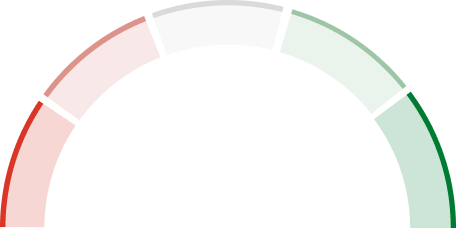
ZetaChain (ZETA) sentiment
About ZetaChain
What Is ZetaChain
ZetaChain is a layer-1 blockchain designed to enable seamless interoperability between various blockchains.Origin and Background
Launched in early 2023, ZetaChain emerged from a team of blockchain experts aiming to solve cross-chain connectivity issues. The founding team includes developers with experience from projects like Cosmos and Tendermint. It builds on the Cosmos SDK to create a unified platform for omnichain applications.Core Concept and Ecosystem
At its heart, ZetaChain focuses on omnichain smart contracts, allowing dApps to operate across multiple chains without wrapped assets. The ecosystem includes tools for developers to build interconnected apps, supporting chains like Ethereum, Bitcoin, and Solana. It fosters a growing network of DeFi protocols, NFTs, and cross-chain payments, with ZETA as the native token for fees and staking.How Does ZetaChain Work
Blockchain and Consensus Mechanisms
ZetaChain operates as a Proof-of-Stake (PoS) blockchain using the Cosmos SDK and Tendermint consensus. This setup ensures fast, secure block production through validator staking.Key Technical Principles
It connects external chains via observers that monitor events and states. Signers use threshold signature schemes (TSS) like GG20 for distributed key management, preventing single points of failure. Smart contracts enable cross-chain interactions, with public keys for transparency and private keys secured in a decentralized manner. All transactions are recorded immutably on-chain.How Is New ZetaChain Created
Issuance and Mining/Staking Mechanisms
New ZETA tokens are minted through staking rewards in its PoS model. Validators stake ZETA to participate in consensus and earn proportional rewards from block production and fees.Supply Limits and Inflation Model
The maximum supply is capped at 2,100,000,000 ZETA, with an inflationary model to incentivize staking. Inflation decreases over time as the network matures. Rewards are distributed based on staked amounts, encouraging long-term holding and network security. No traditional mining; it's all staking-based.The Use Cases of ZetaChain
Payments and Cross-Border Transfers
ZETA facilitates seamless cross-chain payments, enabling users to transfer value between blockchains like Bitcoin and Ethereum without intermediaries.DeFi and Smart Contracts
It supports omnichain DeFi apps, where users can lend, borrow, or trade assets across ecosystems using unified smart contracts.NFTs and Governance
ZetaChain powers cross-chain NFTs, allowing ownership and trading on multiple networks. Governance involves ZETA holders voting on proposals, shaping the protocol's future. Other uses include value storage and decentralized apps that leverage its interoperability for broader adoption.Buy, Send, or Store ZetaChain
Purchasing Channels and Processes
Buy ZETA on exchanges like WEEX Exchange or through OTC platforms. Start by registering on a trusted exchange, deposit funds, and trade for ZETA. For a smooth experience, check out WEEX Exchange, where new users can earn a free 20 USDT bonus upon registration—it's a reliable spot for crypto trading. https://www.weex.com/how-to-buyWallet Types and Storage Security
Store ZETA in hot wallets (like mobile apps for quick access) or cold wallets (hardware devices for enhanced security). Always enable two-factor authentication and keep private keys offline to avoid hacks. Sending involves entering the recipient's address, confirming the amount, and paying network fees.Pros & Cons / Risks
Advantages
- High interoperability connects diverse blockchains efficiently. - Strong security via PoS and distributed TSS. - Fast transactions with low fees due to Tendermint consensus. - Decentralized and transparent architecture builds trust.Risks and Disadvantages
- Price volatility can lead to significant losses. - Regulatory uncertainties in crypto may impact adoption. - Technical risks like smart contract bugs or network congestion. - Dependency on external chains could introduce indirect vulnerabilities.Comparison
ZetaChain vs. Bitcoin
Unlike Bitcoin's focus on simple value storage with PoW, ZetaChain emphasizes cross-chain interoperability using PoS for efficiency.ZetaChain vs. Ethereum
Ethereum excels in smart contracts but struggles with scalability; ZetaChain extends this by enabling seamless multi-chain interactions, positioning it as a connector rather than a competitor.Conclusion / Next Steps
ZetaChain holds promise for a more interconnected crypto future, potentially driving adoption through omnichain tech. Explore its whitepaper or roadmap for deeper insights. Join the community on social platforms to stay updated, and consider staking ZETA to participate actively. For trading, sign up on WEEX Exchange to get started—check it out for secure options.Market & Ecosystem
Market Cap & Trading Volume
As of September 5, 2025, ZetaChain's market cap is $183,464,251 USD, with a 24-hour trading volume of $9,686,363 USD.Exchanges Where It’s Listed
ZETA is available on major platforms including WEEX Exchange, known for its user-friendly interface and bonuses.Community Size & Activity
The community is active on Twitter, Reddit, and Telegram, with growing discussions around interoperability. Engagement includes developer forums and regular AMAs.Ecosystem Growth
Partnerships with chains like Ethereum and Solana boost growth. Developer activity is rising, with new dApps and integrations enhancing the omnichain ecosystem.Official links
 Website
 Whitepaper
 GitHub
Social media and community
 Reddit
 X(Twitter)
FAQ
1. What is the current price of ZetaChain (ZETA) in USD?
2. What is the market capitalization of ZetaChain (ZETA)?
3. What is the circulating supply of ZetaChain (ZETA)?
4. What factors influence the price of ZetaChain (ZETA)?
5. Is ZetaChain (ZETA) a good investment?
6. Where can I buy ZetaChain (ZETA)?
7. What are the typical fees when buying ZetaChain (ZETA)?
8. What are some technical indicators used for analyzing ZetaChain (ZETA)?
Currency price converter
Popular








Global prices
How to buy


ZetaChain news
Bitcoin vs. Gold in 2026: Which Asset Performs Better in Different Markets?
Bitcoin vs. gold in 2026: Why are both assets falling, and what does their changing correlation mean? Discover what drives Bitcoin and gold prices and how traders can navigate different market conditions.
What is your view on Binance's competitive advantages?
When the dividends of rule arbitrage gradually approach zero, can we produce product strength, governance capability, and trust that are commensurate with its scale?
I never expected that the first application of AI x Crypto would be in security auditing
AI has accelerated attack efficiency and also promoted the upgrade of defense systems. The security audit sector is undergoing a transition from a dividend model to a competitive model.
Global Launch: As predictions become the most scarce asset in the AI era, Manadia is defining the next generation of the value internet
The trusted AI prediction ecosystem Manadia, which has secured $7 million in funding from well-known institutions like OKX, will globally launch in June. The core token UMXM has already been listed on multiple mainstream platforms, inviting you to seize the new blue ocean of the trillion-level predi...
Who is footing the bill for the $64 billion accounting frenzy?
Affected by Bitcoin falling below $60,000, publicly listed companies heavily invested in this asset are facing huge paper losses and valuation discounts, and their debt structure and accounting standards may trigger structural liquidity risks in the future.
Morning Report | CoinEx becomes a key hub for Iran to evade sanctions, involving over $3.8 billion in funds; Kalshi seeks a new round of financing, with a valuation potentially rising to $40 billion
Overview of Important Market Events on June 25
View more

View more


