Uniswap's Wild Evolution: From Protocol to Chain, Can Unichain Reshape the DeFi Landscape?



Original Title: "Uniswap's Wild Evolution: From Protocol to Chain, How Unichain Reshapes the DeFi Landscape?"
Original Author: Luke, MarsBit
In the decentralized finance (DeFi) space, Uniswap has always held an unshakable leadership position in terms of trading volume, user base, and technological innovation. Two months ago, Uniswap Labs announced the launch of Unichain, an Ethereum Layer 2 network based on OP Stack, and deployed it on the testnet. This news not only drew widespread industry attention but also injected new imagination into the DeFi market.
As the largest position in the Grayscale DeFi portfolio, the influence of $UNI has crossed the boundaries of DeFi. The launch of Unichain undoubtedly signifies a redefinition of Uniswap's positioning: transitioning from a single protocol to a chain-level platform serving as DeFi infrastructure.
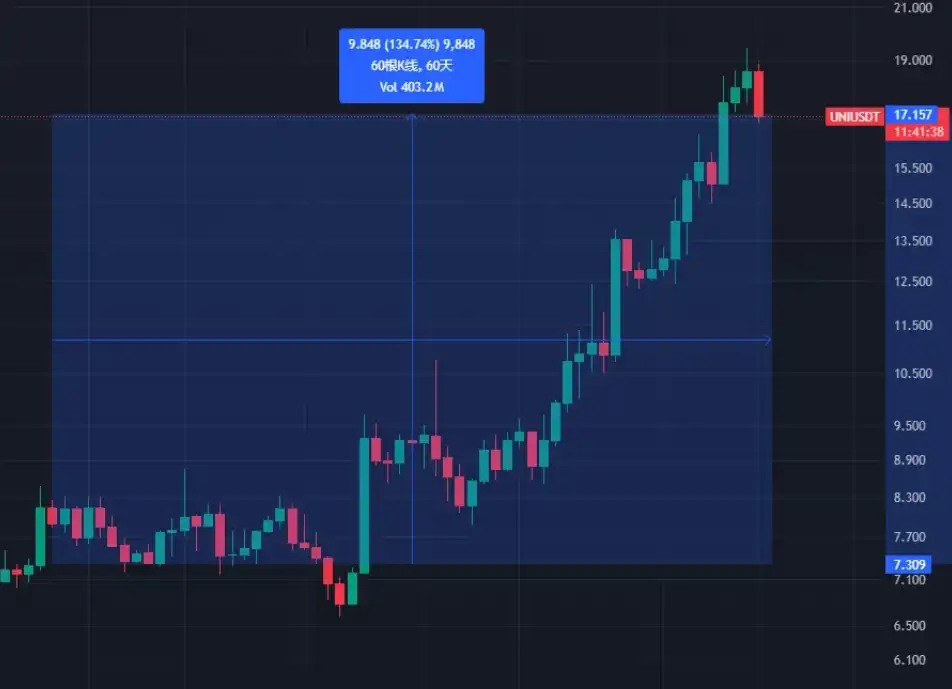
Since the October 10 unveiling of Unichain by Uniswap Labs, the $UNI price has surged 134% in one month.
Today, Unichain is on the verge of launching. Why did Uniswap decide to build its own chain? What changes can Unichain bring to the DeFi market? From technological innovation to token empowerment, and from market positioning to value assessment, this article will comprehensively analyze the core highlights and future potential of Unichain.
From the Rise of AppChains to the Birth of Unichain
The concept of AppChains was initially popularized by the Cosmos SDK and has seen a new surge in recent years with the maturity of Ethereum scaling solutions. As blockchains designed specifically for particular applications, AppChains can provide highly customized performance optimizations to meet the dual needs of top projects in terms of performance and narrative. From Cosmos's Terra to chains built on the Optimism OP Stack like Base and Mantle, AppChains have gradually formed a new development trend.
Amidst this trend, Uniswap launched Unichain, not only following this wave but also aiming to break through the limitations of existing DeFi protocols with innovative technology and an economic model. The launch of Unichain signifies Uniswap's entry into a new phase from a single application to a chain-level architecture, showcasing its ambition to reshape the DeFi market landscape.
The rise of application-specific chains stems from their ability to provide unique technical advantages for a particular protocol. Traditional public chains (such as Ethereum) are general-purpose platform chains where all protocols need to share the same network resources, while application chains are blockchain environments tailored specifically for a protocol. This design has the following key advantages:
· Customization: Optimizing the consensus mechanism, fee structure, and privacy model to perfectly suit the protocol's needs.
· Performance Optimization: Supporting faster transaction confirmation speeds and lower fees to enhance user experience.
· Autonomy: Granting the protocol greater development and governance freedom, reducing reliance on the main chain.
From the launch of the Cosmos SDK in 2018 to the widespread adoption of modular tools such as the OP Stack from Optimism and Arbitrum Orbit by 2023, the technical barriers of application chains have significantly decreased. This has created favorable conditions for more protocols to enter the realm of application chains.
As a leader in the DeFi space, Uniswap has been exploring how to further expand its protocol's capabilities. Behind the launch of Unichain lies not only the goal of addressing performance bottlenecks but also considerations in the following two areas:
1. Performance Requirements: While the Ethereum main chain boasts high security and decentralization, its transaction speed and cost have always been key bottlenecks limiting the Uniswap user experience. Built on the OP Stack technical framework, Unichain can achieve a block time of 250 milliseconds and significantly reduced transaction costs, providing users with a near real-time trading experience.
2. Narrative Breakthrough: The launch of the application chain transforms Uniswap from a single protocol into a chain-level platform capable of carrying a larger narrative, bringing new value propositions to its $UNI token. This transformation not only helps solidify its position in the DeFi market but also opens up more possibilities for its future ecosystem development.
Unichain Technical Innovation
To address the current bottlenecks faced by Uniswap, Unichain's design, from performance to fairness, to cross-chain interoperability, each innovation aims to solve practical problems encountered by DeFi users and developers in the existing blockchain ecosystem, with 5 key technological innovations worth highlighting.
1. Rollup-Boost and Sequencer Builder Separation: Redefining the Fairness Rules of MEV
In traditional blockchain architecture, the dual roles of sequencer and block builder are often centralized in a single entity, leading to the rampant issue of MEV (Miner Extractable Value). Unichain's Rollup-Boost technology introduces Sequencer Builder Separation (SBS), thoroughly separating sequencing from block construction, providing a fresh solution for the fair distribution of MEV.
In its implementation, Unichain introduces the Block Builder Sidecar as a module connecting the sequencer and external block builders, allowing builders to submit block proposals through market competition. When the sequencer receives multiple block proposals, it selects the optimal solution to submit on-chain. This design not only decentralizes the power of block construction but also ensures that MEV rewards are no longer monopolized by a single sequencer. This mechanism directly alleviates the drop in user experience caused by front-running transactions or censorship behavior, while making MEV distribution more transparent and fair.
2. Trusted Execution Environment (TEE): A New Cornerstone for Transaction Privacy and Fairness
The privacy and fairness of blockchain transactions have always been at the forefront of technological challenges, and Unichain leverages Trusted Execution Environment (TEE) technology to elevate these aspects to new heights. TEE provides a hardware-level secure space for handling sensitive logic during transaction ordering and block construction.
The key highlight of TEE is its ability to simulate multiple possible paths of transaction execution and exclude potentially failed transactions to ensure the final block building efficiency. In user interactions, this mechanism significantly reduces the number of failed transactions due to network congestion or malicious behavior. Furthermore, TEE also supports the generation of execution proofs, allowing users to verify if the ordering of each transaction complies with the fairness principle. For DeFi users long plagued by the MEV problem, this is a significant optimization.
Privacy protection is another core function of TEE. In the block building process, the specific details of transactions are invisible to the outside, effectively preventing front-running and other malicious behaviors, and providing a more stable environment for high-frequency transactions.
3. Flashblock: A Smooth Transaction Experience Every 250 Milliseconds
The length of block time directly affects user experience, and Unichain's Flashblock technology compresses this metric to the extreme—allowing for a partial confirmation every 250 milliseconds. Traditional blockchains often suffer from low block efficiency due to the delay in state root computation, while Flashblock decomposes the full block into multiple small parts and significantly boosts transaction speed through parallel processing.
The benefits of this mechanism are not only reflected in speed. For Liquidity Providers (LPs), the shorter confirmation time greatly reduces the adverse selection risk brought by market volatility, while also reducing slippage losses. For regular users, Flashblock means a lower transaction failure rate and almost instant transaction feedback. The ability for fast confirmation not only optimizes the user experience in the Uniswap ecosystem but also provides an excellent environment for high-frequency traders.
4. Unichain Validation Network (UVN): A Secure Shield for Sorters
To address the potential risks of centralization in sorters, Unichain has designed a Validation Network (UVN) as an additional layer of security. In this architecture, UVN validators operate independently of the sorter and are responsible for auditing the legitimacy and consistency of blocks.
The parallel validation of UVN not only reduces the risk of a single point of failure in sorters but also accelerates the finality confirmation of blocks. Through this design, Unichain has found a new balance between decentralization and efficiency, providing users with higher security.
5. ERC-7802 Cross-Chain Intent: Building Bridges for a Multi-Chain World
In the context of a multi-chain ecosystem, cross-chain asset liquidity is crucial in determining the efficiency of inter-chain collaboration. The Uniswap team and the Optimism team jointly proposed the ERC-7802 cross-chain token standard with the aim of maintaining a unified standard for tokens during cross-chain transactions. ERC-7802 defines standardized minting and burning interfaces to ensure that the total supply of assets remains constant during inter-chain circulation.
The application scenario of this standard includes the fast cross-chain operation of tokens on Unichain, for example, users can seamlessly transfer ERC-20 tokens from the Ethereum mainnet to Unichain and vice versa to other ecosystems. The modular design of ERC-7802 further reduces reliance on specific bridge protocols, leaving more room for the future expansion of cross-chain technology.
Through these five technological innovations, Unichain has not only solved the performance, privacy, and fairness issues in the existing blockchain ecosystem but has also taken a significant step forward in the field of multi-chain interoperability. These groundbreaking technologies have laid the foundation for Unichain's core competitiveness in the DeFi market and provided a new paradigm for the industry's future development.
$UNI Token Empowerment: From Governance to Yield
The launch of Unichain has not only been a technological innovation but has also brought about new usage scenarios and economic value for the $UNI token. From a governance tool to a productive asset, the transformation of the $UNI token has made it play a more critical role in the Uniswap ecosystem.
Validator and Staking Mechanism: Core Drivers of Network Operation
In Unichain's architecture, validators are the core ensuring network security and efficiency, and a prerequisite to becoming a validator is staking $UNI tokens. Unichain's validation network adopts a unique economic model that incentivizes users to stake $UNI tokens to participate in network governance and yield distribution.
The operation mechanism is as follows:
· Mainnet Staking: Validators need to stake $UNI tokens on the Ethereum mainnet, and staking data is synchronized to the chain via Unichain's native bridging technology.
· Yield Distribution: At the beginning of each validation period (Epoch), the validator with the highest staking weight is selected as an active node, responsible for block validation, and receives fuel fee rewards. Nodes that do not participate in validation do not receive yields.
This mechanism has endowed $UNI with the utility of staking, transforming it from just a governance token to a productive asset. Users, while staking, can not only help maintain network stability but also earn actual returns through transaction fees and block rewards.
MEV Yield Distribution: Innovative Fair Incentives
MEV (Miner Extractable Value) is a vital part of Unichain's economic model. In traditional blockchains, MEV rewards are usually monopolized by sequencers or miners, leading to resource centralization and increased user transaction costs. Unichain changes this unfair situation by introducing the MEV Reallocation Mechanism.
On Unichain, the sequencer utilizes a Trusted Execution Environment (TEE) to allocate MEV proceeds to validators and liquidity providers (LP) in the network according to rules. This mechanism enables all roles in the ecosystem to fairly share the value of MEV, preventing it from being monopolized by a single entity.
Specifically:
· MEV Tax: Applications can set priority ordering rules for their transactions, allocating a portion of MEV proceeds to LPs or directly rewarding users.
· Revenue Pool Distribution: MEV proceeds generated in each transaction are proportionally injected into validator and user reward pools, increasing network participation.
This innovation not only reduces LP participation risks but also attracts more users to join the ecosystem, providing strong support for Unichain's liquidity growth.
$UNI Value Transformation: From Governance Token to Ecosystem Core Asset
In the early days of Uniswap, $UNI served as a governance token, with its primary function focusing on protocol governance and community decision-making. However, with the launch of Unichain, the functionality of $UNI has been significantly expanded:
1. Asset Staking: Validators stake $UNI to receive block rewards, making the token a vital economic tool for the validation network.
2. Cross-Chain Bridging: Through the ERC-7802 standard, $UNI's movement between Unichain and other ecosystems is more efficient, further enhancing its liquidity and adaptability.
3. Revenue Growth: MEV redistribution and the introduction of gas fees have brought tangible revenue growth to $UNI holders.
Furthermore, the new role of $UNI in Unichain has placed it in an "Empower-Enhance-Feedback" positive cycle. The staking demand from validators, MEV revenue distribution, and users' pursuit of lower transaction costs collectively drive the growth in $UNI demand, making it more attractive in the DeFi market.
By redefining the utility of $UNI, Unichain has not only strengthened Uniswap's core position in decentralized finance but also provided ecosystem participants with more diverse economic benefits. This innovative token empowerment has made Uniswap's ecosystem more sustainable while offering a new reference for the DeFi market.
Unichain Market Positioning and Future Outlook
The birth of Unichain is not only an upgrade to its own ecosystem, but also a precise response to the development trend of the blockchain industry.
Comparison with Application Chains and Generic Rollups: Unique Positioning in Multiple Dimensions
Unichain is positioned as a dedicated Layer 2 chain based on the Optimism OP Stack, a choice that sets it apart from both traditional application chains and the development model of generic rollups.
· Set Apart from Application Chains in Flexibility: Application chains are often tailored to a single protocol, such as the dYdX Chain built on Cosmos, focusing on perpetual contract trading. While Unichain is a dedicated chain for Uniswap, it also retains the interoperability of generic rollups. Unichain's design allows other DeFi applications to be easily deployed, creating a super ecosystem of liquidity sharing.
· Set Apart from Generic Rollups in Specialty: Generic rollups, such as Arbitrum and zkSync, focus on providing scalability for a wide range of use cases. In contrast, Unichain is deeply optimized for DeFi transactions, with features like Flashblocks and a priority ordering mechanism ensuring very low latency and efficient transaction execution. This customization gives it a clear competitive advantage in DeFi applications.
This positioning between application chains and generic rollups allows Unichain to focus on the development of its own ecosystem while maintaining interoperability and compatibility within the larger Ethereum ecosystem. Furthermore, Unichain's interoperability is not only seen at a technical level, but also in its support for the Ethereum Rollup-Centric strategy. As a member of the OP Superchain ecosystem, Unichain takes full advantage of Optimism's cross-chain communication capabilities and enhances the flexibility of cross-chain operations through the ERC-7802 standard.
· Ecosystem Advantages of OP Superchain: Unichain can seamlessly transfer assets and information with chains like Base and Mantle through Optimism's native interoperability. This ability to share ecosystem resources allows Unichain to quickly establish liquidity advantages in the early stages.
· Application of ERC-7802 Cross-Chain Intent: Through a standardized cross-chain operation interface, UniChain can simplify the token transfer process between different chains. For example, users can easily cross-chain their $UNI from the Ethereum mainnet to UniChain, conduct efficient DeFi transactions, and then move back to other chains for further operations. This design reduces the complexity of cross-chain operations and provides users with a better experience.
This efficient ecosystem integration capability makes UniChain not only a technical extension of Uniswap but also a key pillar of the entire Ethereum multi-chain ecosystem.
Will UNI Skyrocket Directly on UniChain Launch?
Founder of DeFi Report, Michael Nadeau, stated that Unichain, the new L2 blockchain for Uniswap, may bring great benefits to Uniswap Labs and the project's token holders, potentially earning nearly $468 million per year from fees they would have originally paid to the Ethereum network. Uniswap Labs and UNI token holders will benefit the most from UniChain, while ETH holders may suffer the greatest losses. The potential sources of income include:
· Settlement Fees: Uniswap Labs (and most likely UNI token holders) will no longer need to pay $368 million to Ethereum validators, but will receive this fee upon UniChain's launch.
· MEV: In addition to collecting Ethereum's settlement fees, Uniswap will also be able to receive MEV because they will have validators on UniChain. It is estimated that MEV accounts for about 10% of Uniswap's total fees (which was $100 million last year). They can also choose to share a portion with token holders.
· Liquidity Providers: Liquidity providers will continue to receive 100% of transaction fees and may also participate in settlement and MEV once UniChain is live.
First, let's look at the breakdown of the $468 million: $368 million in transaction fees (i.e., Gas fees paid to Ethereum validators during transactions) and $100 million in MEV value (additional income generated by validators through transaction reordering, sandwich attacks, etc.).
Unichain, as a Layer 2 technology based on Optimistic Rollup, is able to process transactions within its independent network and then aggregate this batch transaction data before submitting it to the Ethereum main chain. During this process, Unichain has the opportunity to capture transaction fees and MEV revenue. However, whether this vision can become a reality depends on an important premise: all LP and transaction activity of all liquidity pools must be fully migrated from the Ethereum mainnet to Unichain, while achieving 100% efficiency in capturing MEV.
Clearly, such conditions are difficult to achieve.
Despite the emergence of various Layer 1 and Layer 2 solutions in the market, Ethereum remains the preferred platform for most altcoins and DeFi liquidity. With its mature ecosystem and market recognition, Ethereum has become a core barrier that is difficult to shake in terms of liquidity migration. Furthermore, liquidity migration itself entails high costs and risks, making it nearly impossible for a full-scale liquidity transfer to Unichain.
Of course, Unichain can also encourage some funds and transaction activities to move to its platform through attractive incentives such as low transaction fees and liquidity mining. However, even so, the scale of this migration remains limited.
So, how much value can Unichain actually capture?
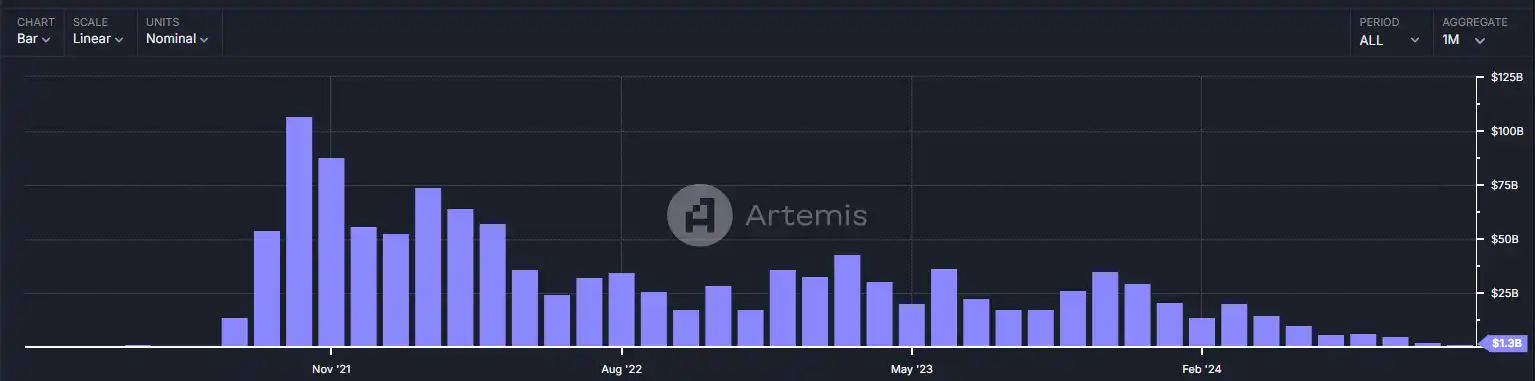
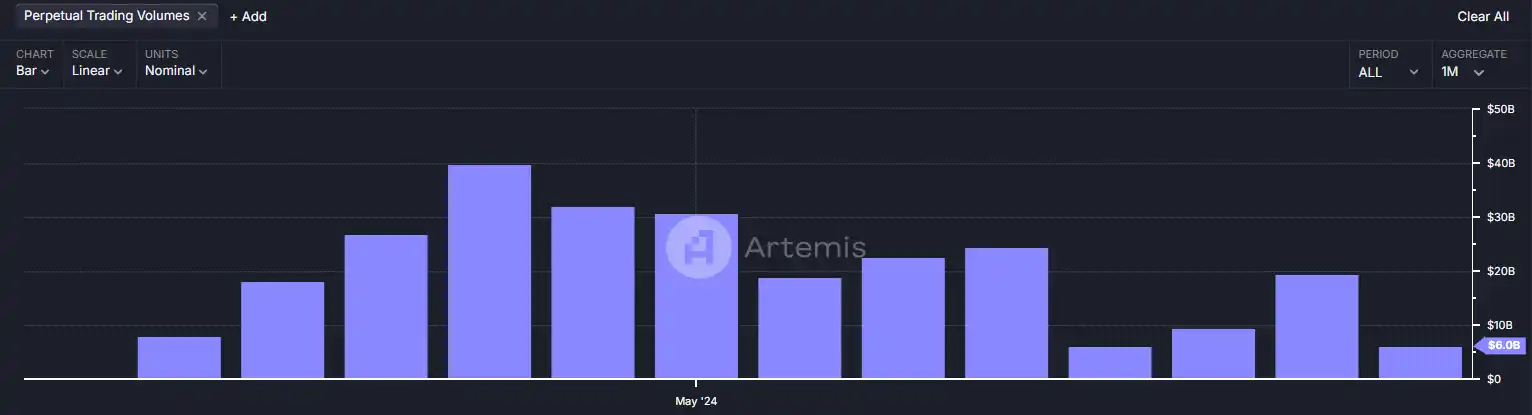
Taking dYdX, the first application chain, as a reference, after the launch of its V4 version (dYdX Chain), the monthly trading volume was four times that of the V3 version, accounting for 82% of the protocol's total trading volume. However, compared to perpetual contract trading, the performance requirements for spot trading and asset exchanges are relatively lower, so it is unlikely that Unichain will achieve the trading volume or TVL of dYdX in the short term. By conservative estimates, Unichain's value capture may be only 30% of the theoretical value, bringing Uniswap approximately $140 million in revenue annually.
Furthermore, $UNI has long been criticized for not effectively capturing protocol value, and the launch of Unichain provides a solution to this issue. Through the empowerment of Unichain, $UNI can directly capture the value generated by the protocol, which is crucial for the tokenomics model.
It is clear from this that the launch of Unichain will undoubtedly have a profound impact on the ecosystem. Unlike abstract and distant visions like Uniswap X, Unichain is a major boon that can be practically implemented and demonstrated.
As the undisputed leader in the DeFi race, Uniswap will not miss out on this bull market cycle. We can boldly predict that the ATH will be reached within 3 months, and this is just the beginning.
Conclusion
Uniswap's Unichain is not only a technological breakthrough but also a strategic layout for the future landscape of DeFi. Through five core innovations, Unichain has brought new imaginative space to the DeFi market in performance optimization, privacy protection, liquidity aggregation, and ecosystem integration.
As Syncracy Capital co-founder Ryan Watkins said, blockchain applications are undergoing a significant transformation from relying on the underlying layer to controlling their own economy. The launch of Unichain not only strengthens Uniswap's core position in the DeFi market but also injects new vitality into the Ethereum ecosystem. Driven by both technological innovation and economic transformation, the success or failure of Unichain will be a crucial litmus test for the era of blockchain diversification.
The next step for DeFi may have already begun with Unichain. Let's wait and see.
You may also like
How to choose between buying discounted ETH, Bitmine, and SharpLink?
Do you want to buy CRCL?
Wosh: Inflation has cooled in recent weeks, AI is reshaping the economy, and forward guidance has lost its necessity
The most secretive AI winner
Looking at Stripe's ambitions and the future of stablecoins from OUSD
From Pump.fun to Collector Crypt: Has Solana's income throne changed hands?
Dan Bin's latest speech: Don't miss out on a great era
Robinhood launches its own blockchain, no longer wanting to be a tenant on others' chains
Why Tokenized Stocks Are Booming in 2026 While Crypto Is Still Struggling
Former ByteDance employee's account: How I started with two Pinduoduo hard drives and made six times the profit with Seagate to achieve financial freedom?
MiCA reshuffle begins, Binance temporarily bids farewell to the EU
How does Gate redo "buying and selling stocks" from the cryptocurrency world to the stock market?
Visa and Mastercard join 140 giants to launch a new stablecoin, but the impact on the market landscape may still be limited
Circle CEO responds to OUSD's challenge: Stablecoins are a winner-takes-all business, and we will not slow down
Argentina vs Cape Verde: When a Record-Breaking Legend Meets an Unbreakable Underdog
WEEX exclusive pre-match analysis of Argentina vs Cape Verde, exploring Messi-led Argentina’s dominance and Cape Verde’s historic defensive breakout, with a breakdown of volatility, structure, and match dynamics.
WEEX Launches Depth Chart for Spot Trading
Raising interest rates to protect STRC and selling coins to maintain credit, this time the strategy has chosen the two most expensive paths
Morning Report | Samsung announces a 265.5 trillion won investment plan, focusing on semiconductor and AI computing power data centers; Vitalik publishes an article detailing the entire technology tree behind the confusion protocol (iO) mainline
How to choose between buying discounted ETH, Bitmine, and SharpLink?
Do you want to buy CRCL?
Wosh: Inflation has cooled in recent weeks, AI is reshaping the economy, and forward guidance has lost its necessity
The most secretive AI winner
Looking at Stripe's ambitions and the future of stablecoins from OUSD
From Pump.fun to Collector Crypt: Has Solana's income throne changed hands?