
 Buy Crypto
- Markets
 Futures
- Spot
- Copy Trade
- Earn
- More
Tornado Cash's co-founder lawyer is considering filing a motion for invalidation, questioning the evidence submitted to the government.

BlockBeats News, July 22nd, according to The Block, Tornado Cash co-founder Roman Storm's lawyer is considering filing a motion to dismiss the case, citing doubts about the evidence presented by the government. The defense points out that a victim of a rug pull scam, summoned by the prosecution, may never have used this privacy-focused cryptocurrency mixing tool.
As Storm's trial enters its second week, his defense lawyer David Patton has challenged the witness's claim that their stolen cryptocurrency was laundered through Tornado Cash. Witness Hanfeng Ling had previously testified that she fell victim to a rug pull scam in 2021 and was informed by a "cryptocurrency recovery service" that some of the funds flowed into Tornado Cash.
However, over the past weekend, Storm's lawyers stated that they could not trace Ling's funds to have ever entered Tornado Cash. Ethereum security expert Taylor Monahan posted on X platform (formerly Twitter) over the weekend stating that scammers would not use Tornado Cash at all.
In a series of posts, Monahan elaborated on why she believes the funds did not pass through Tornado Cash. "Based on my on-chain sleuthing, I already knew her funds didn't go through Tornado," Monahan said. "I have no idea what they were tracing. There was no Tornado Cash involved at all."
You may also like
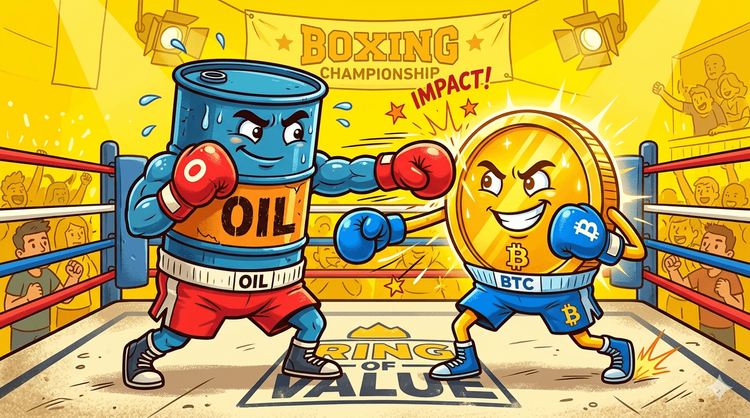
How the US-Iran War Could Affect Oil and Bitcoin Prices (Latest Analysis)
The outbreak of the US-Iran war on February 28, 2026, has provided an unprecedented real-time laboratory for understanding how geopolitical oil shocks interact with an increasingly institutionalized cryptocurrency market. This article examines the relationship between crude oil prices and Bitcoin throughout the conflict, analyzing price movements, correlation patterns, and the underlying transmission mechanisms.

OpenAI Wants to Write Its Own Rules|Rewire News Brief

Chaos Labs Exits, Who Will Pick Up Aave's Risk?
Stealthy Financial War? Iran Collects Strait Transit Fees in Stablecoin

OpenAlice: One Person, That's a Jane Street | Project Overview

The Small-Town Youth Labeling Big AI Models

Morning Report | Strategy increased its holdings by 4,871 BTC last week; Toss plans to develop its own blockchain and issue a native cryptocurrency; OpenAI's CFO privately questioned the timing of the IPO in 2026

Research: Stablecoins have a trading volume of 35 trillion a year, how much of it is real payment?

Galaxy Research: AI agents are giving rise to new species on the blockchain, how zero-human companies activate the financial flywheel

Data Research: How big is the liquidity gap between Hyperliquid and CME crude oil?
Why Are GPU Prices Skyrocketing Out of Control?

How to Master Claude Cowork Completely?

70-Page Confidential Letter Alleges First Charge of 'Lying,' Altman Tells Board 'I Can't Change My Personality'

Is Altcoin Season Starting in 2026? What Traders Should Watch Now
Altcoin season signals are becoming clearer in 2026 as capital rotation across crypto markets accelerates. Here’s what traders should watch and how strategy-based participation is evolving in the current market cycle.

Bitcoin ETF Inflows in 2026: Impact on BTC Price and Crypto Market Trends
Bitcoin ETF inflows are reshaping BTC price trends and crypto market liquidity in 2026. See how institutional capital is influencing volatility, trading behavior, and portfolio allocation strategies across crypto markets.
Visa's Stablecoin Strategy: Cards, Settlement, and the Future

Stock Market Split

How to capture the next Alpha in the narrative of predictive markets?
How the US-Iran War Could Affect Oil and Bitcoin Prices (Latest Analysis)
The outbreak of the US-Iran war on February 28, 2026, has provided an unprecedented real-time laboratory for understanding how geopolitical oil shocks interact with an increasingly institutionalized cryptocurrency market. This article examines the relationship between crude oil prices and Bitcoin throughout the conflict, analyzing price movements, correlation patterns, and the underlying transmission mechanisms.


 App
App