
 Buy Crypto
- Markets
 Futures
- Spot
- Copy Trade
- Earn
- More
New York Times: USD1 Has Become the Trump Family's Cryptographic Engine

Original Article Title: Binance Gives Trump Family's Crypto Firm a Leg Up
Original Article Author: David Yaffe-Bellany, The New York Times
Translation: Peggy, BlockBeats
Editor's Note: Against the backdrop of Trump's return to power and a shift in U.S. crypto policy, the stablecoin project involving his family is rapidly expanding. The technical support and incentives provided by Binance have given World Liberty Financial a key growth boost in a short period of time.
How will this structure, where the exchange's business incentives, stablecoin's revenue model, and top-level policy-making authority are intertwined, affect the rules and boundaries of the crypto market?
Below is the original article:
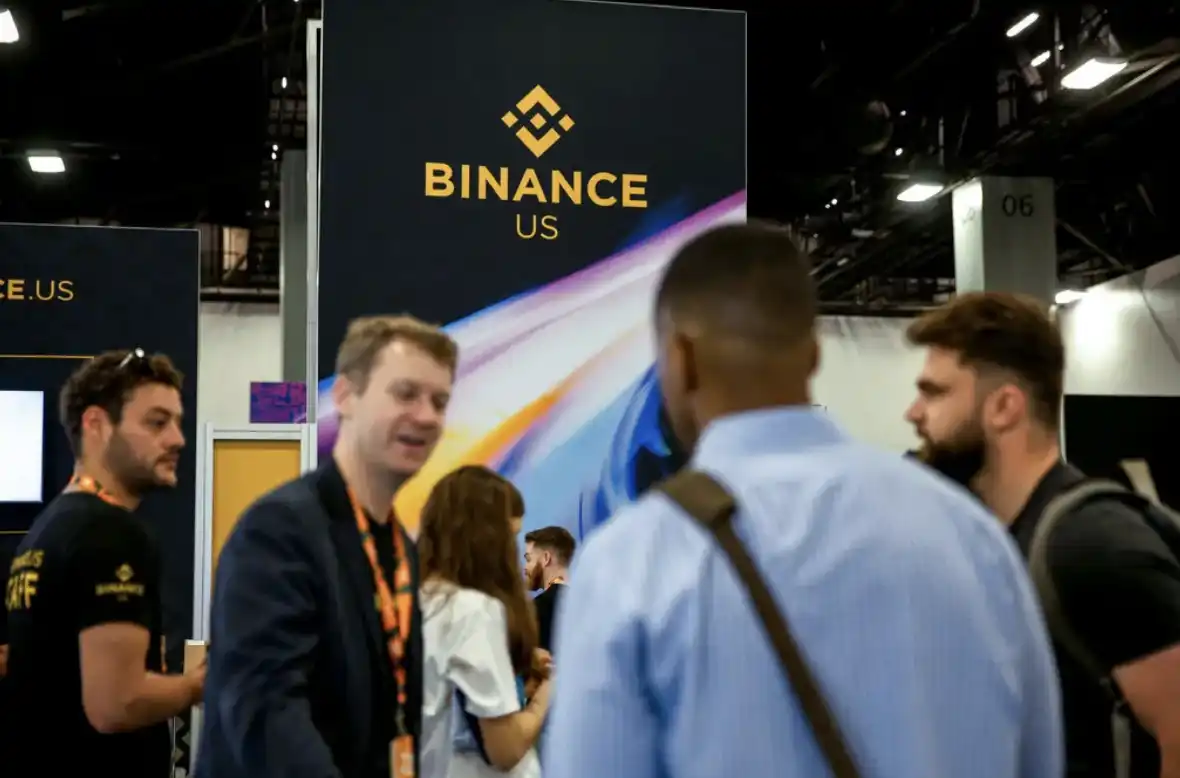
Binance has launched a series of marketing campaigns to encourage its users to purchase the stablecoin issued by World Liberty Financial. Image Source: Reuters / Marco Bello
World Liberty Financial, a cryptocurrency startup founded by the Trump family, reached a significant milestone last month. The total circulation of the company's flagship digital token surpassed $5 billion, propelling it into the ranks of the world's largest cryptocurrencies.
"Another milestone achieved," the company announced on social media. The president's son, Eric Trump, also celebrated the moment with a series of fire emojis.
This achievement was largely thanks to the collaboration between World Liberty and the cryptocurrency exchange platform Binance. Founded by billionaire Changpeng Zhao, Binance had received a pardon from President Trump last year.
As the world's largest cryptocurrency exchange platform, Binance has become a key "engine" in the Trump family's business portfolio over the past two months. The exchange platform has launched a series of marketing campaigns to encourage users to purchase USD1, the stablecoin issued by World Liberty. This type of cryptocurrency is pegged 1:1 to the U.S. dollar, making it more suitable for payments and transactions.
According to data analytics firms Arkham and Nansen, approximately 85% of the circulating $5 billion USD1 tokens are held in Binance accounts, even though the exchange platform is not accessible to U.S. users.
Jonathan Reiter, co-founder of the encryption data company ChainArgos, stated: "Most of the funds are concentrated on Binance, and have been almost always there. This is their primary trading venue."
The relationship between World Liberty and Binance has sparked high scrutiny from ethics experts and some members of Congress. They believe that this collaboration poses a serious conflict of interest, as President Trump is now both a key figure in the cryptocurrency space and the highest policymaker in the industry. The White House has publicly supported legislation currently under congressional review, which would lower the barriers for cryptocurrency exchanges to operate in the United States.
In October of last year, President Trump granted a pardon to Zhao Changpeng. Prior to this, Zhao and his company pleaded guilty to violating anti-money laundering regulations in 2023, leading to Zhao serving a four-month prison sentence. Despite this serious criminal record, Zhao was still allowed to continue as a major shareholder of Binance, and this pardon may pave the way for Binance to enter the yet-to-be-approved U.S. market.
Since the pardon, the connection between Binance and World Liberty has deepened further; meanwhile, this cryptocurrency company of the Trump family is facing increasing political pressure from the Democratic Party.
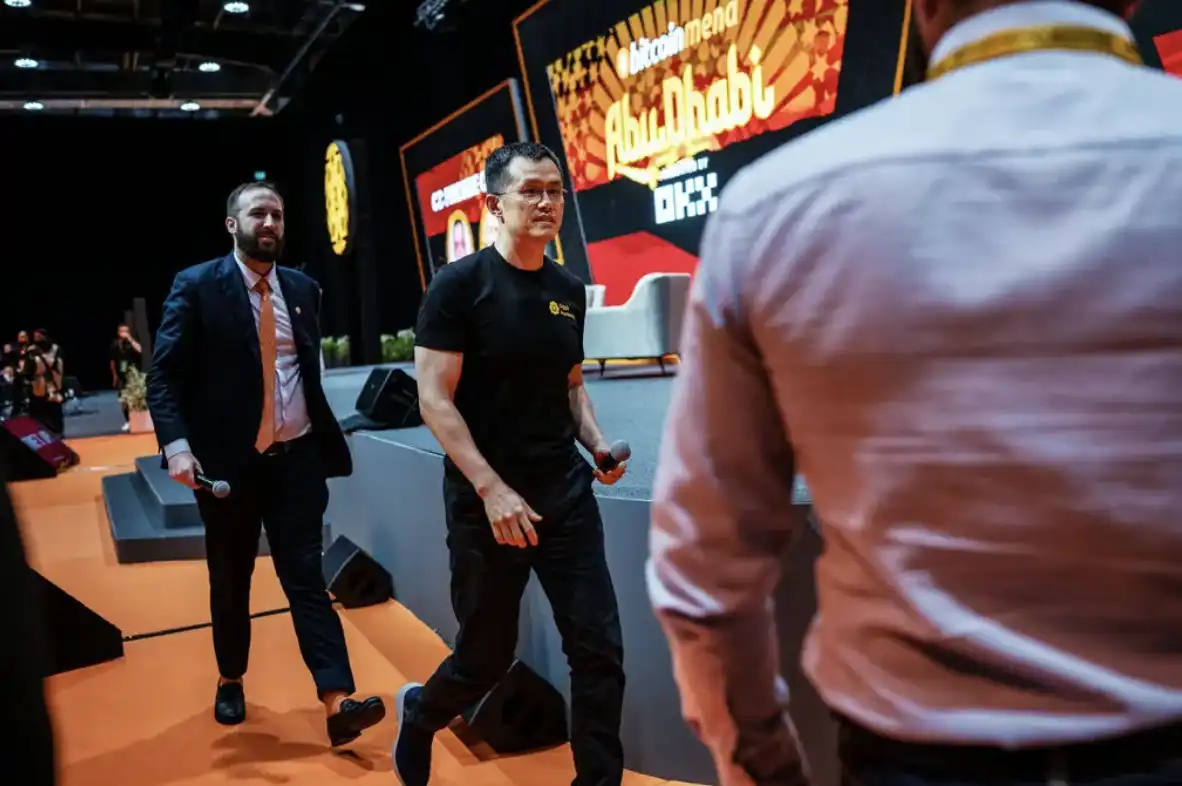
Last October, President Trump granted a pardon to Binance founder Zhao Changpeng. Zhao had previously served a four-month prison sentence for money laundering violations. Image Source: The New York Times / Tamir Kalifa
In December, Binance announced that its users could withdraw and convert stablecoins issued by other institutions to USD1 for free. This concession is significant because transaction fees are a major source of revenue for cryptocurrency exchanges. In fact, Binance has significantly reduced the cost and barrier for users to purchase tokens issued by the president's family company.
Binance also offered users the opportunity to earn interest by holding USD1, a promotional offer that is currently a focal point of intense legislative debate in the U.S. Congress. On January 22nd, Binance stated that users holding USD1 in their platform accounts would collectively share a $40 million reward.
Over the following week, the global transaction volume of USD1 surged, reaching a cumulative increase of nearly $2 billion.
A stablecoin is a highly profitable sector in the crypto industry. Issuers like World Liberty absorb funds from traders, issue tokens to them, invest these funds, and keep the resulting profits. Exchanges play a vital role by providing a platform for users to purchase these tokens.
According to World Liberty's disclosed financial report, most of its deposits are currently invested in government money market funds. The annualized return rate of such funds is about 4%, meaning that with a $5 billion deposit base, the potential annual income could reach $200 million.
A spokesperson for World Liberty stated that the promotional incentives were funded by Trump's crypto company, not Binance, and referred to this as a "standard practice" for stablecoin issuers.
He said: "World Liberty has provided marketing budgets to Binance and other non-U.S. digital asset exchanges, and it is entirely up to these platforms how to use them."
A female spokesperson from Binance responded, stating that "it is not uncommon for large exchanges to hold a significant amount of specific tokens" and that Binance also runs promotional activities for various tokens, not just for USD1.
She added: "We take legal and regulatory requirements very seriously and comply with applicable laws and regulations in the jurisdictions where we operate."
Zhao Changpeng's lawyer stated, "There is no conflict of interest or exchange of benefits." A female spokesperson from the White House also said that Trump's assets have been placed in a trust fund managed by his children, therefore "there is no conflict of interest."
Since Trump returned to the core of power last year, he has led a comprehensive policy shift of the U.S. government towards the crypto industry, ending the regulatory crackdown that began in his first term and embracing the industry that was once seen as a threat to the U.S. financial system.
At the same time, Trump and his children have built a vast crypto business network. Trump himself once promoted a token called $TRUMP; his two eldest sons were involved in founding a publicly traded Bitcoin mining company, American Bitcoin.
At the heart of this family's crypto empire is World Liberty. The company is jointly operated by Trump's sons and the family of White House Middle East Envoy Steve Witkoff. According to Trump's financial disclosure documents, he himself effectively owns shares in World Liberty.
Since its inception, Binance has played a key role in World Liberty's operations.
During the development phase of USD1, Binance provided some underlying technical support for the stablecoin. A World Liberty spokesperson told The New York Times last year that this collaboration "did not involve any quid pro quo."
Binance also participated in a significant early transaction with World Liberty. In early 2025, a company named MGX, backed by the government of the UAE, announced a $2 billion investment in Binance.
At the time, Binance stated that this transaction was settled entirely in USD1, marking the largest investment ever made using a stablecoin.
World Liberty CEO Steve Witkoff's son, Zach Witkoff, unveiled this agreement at a meeting in Dubai in May of last year.
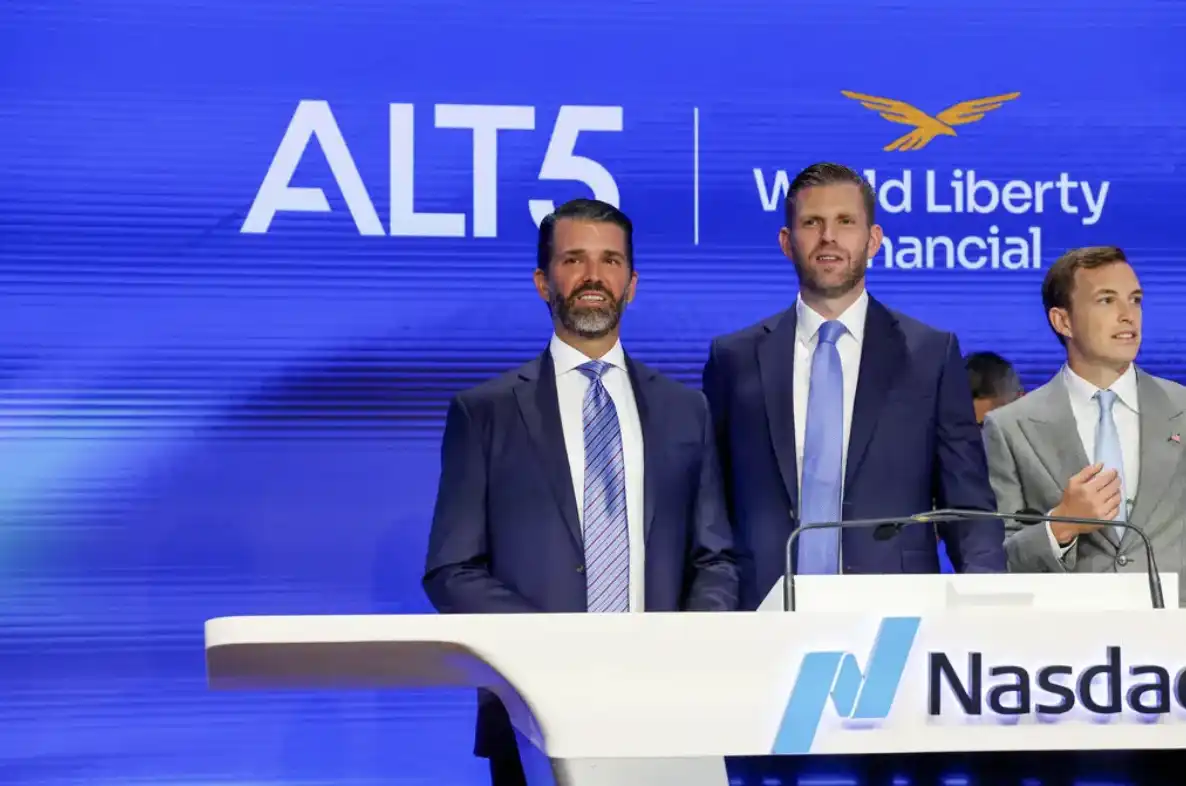
Former President Trump's two sons, Donald Trump Jr. and Eric Trump, have joined Zach Witkoff as business partners in World Liberty Financial. Zach is the son of Steve Witkoff, Trump's Middle East envoy. Image Source: Spencer Platt / Getty Images
"We thank MGX and Binance for their trust in us," said Zach Witkoff at the time. "This is just the beginning."
This transaction publicly established the connection between Binance and World Liberty for the first time, sparking concerns in Washington about potential conflicts of interest. At the time, Changpeng Zhao was openly seeking a presidential pardon; earlier, both he and Binance had pleaded guilty to related charges, which had allowed terrorist organizations and other criminals to conduct transactions on the platform.
"The rent-seeking opportunities here are staggering—the Trump administration may be offering policy favors to the UAE or Binance in exchange for their substantial financial returns," wrote Massachusetts Democratic Senator Elizabeth Warren and Oregon Democratic Senator Jeff Merkley in a letter to U.S. ethics officials last year.
Despite Zhao Changpeng ultimately receiving a pardon, Binance itself did not receive any clemency. Zhao is no longer involved in Binance's day-to-day operations, but retained ownership of the company at the time of his guilty plea. Today, Binance is co-led by two interim chief executive officers, one of whom is co-founder Yi He, who shares children with Zhao Changpeng.
Since Yi He took on this management role in December, Binance has continued its close collaboration with World Liberty.
On December 11, World Liberty announced that Binance would waive fees on some USD1 trades and use the stablecoin as collateral to support another cryptocurrency.
"Binance is making it easier for billions of users to access USD1," Zach Whitcov said in the statement at the time.
Twelve days later, Binance launched the "USD1 Booster Program," offering users up to a 20% annualized return, encouraging them to hold the stablecoin issued by World Liberty.
In early January, Binance followed up with another round of promotions: over a month-long period, rewarding USD1 holders weekly from a $40 million "prize pool."
On social media, the World Liberty founding team viewed Binance's incentives as a crucial step in the company's expansion and publicly supported the exchange platform multiple times.
Last month, a World Liberty executive, Zak Folkman, defended Binance on social media, responding to criticism of its role in the recent market downturn. He suggested that these accusations were "an organized smear campaign."
Some of Binance's promotional efforts coincided with domestic policy debates in the United States, with Trump himself holding significant decision-making power on these issues.
Last year, Trump signed into law the so-called "GENIUS Act," which established relatively friendly regulatory rules for stablecoins. The law explicitly prohibits stablecoin issuers (such as World Liberty) from providing interest directly to users.
However, the law also left a "loophole": while issuers cannot pay interest, it does not prohibit exchanges from providing related benefits, creating conditions for similar incentives through commercial arrangements on platforms in the United States. The largest U.S. exchange platform, Coinbase, offers interest yield to users holding USDC (issued by Circle).
Currently, Congress is considering a broader bill to comprehensively regulate cryptocurrency exchanges and other areas of the industry. In the discussions, banking industry lobbyists are urging lawmakers to close this loophole, concerned that these incentive mechanisms could compete with traditional bank deposit accounts.
The specific arrangement details between World Liberty and Binance remain opaque. However, given that these incentives are funded by World Liberty, some experts question: if these promotional activities take place within the U.S., do they comply with the provisions of the GENIUS Act?
Even if these operations barely comply within the stablecoin legal framework, such actions are precisely the "typical loophole" currently being vigorously debated in Congress, as noted by Corey Frayer, a former SEC official in charge of crypto affairs.
The White House has intervened to mediate this dispute, convening a meeting this week between banking and crypto industry representatives in an attempt to reach a compromise. As Binance primarily operates overseas, regardless of the outcome in Congress, it can continue offering rewards; but if a law banning incentives is ultimately passed—and requires Trump's signature to take effect—Binance will not be able to launch similar promotions in the U.S. market.
"With the presence of World Liberty and USD1, Trump has a direct economic interest in this game," noted Lee Reiners, Duke University's cryptocurrency policy expert.
You may also like

The New Yorker in-depth investigation interpretation: Why do OpenAI insiders consider Altman untrustworthy?
Two Divided Worlds: Insights from the New York Digital Asset Summit, the Most Institutionalized Blockchain Conference

Top Ten Reveals of CZ's New Book: Advance Knowledge of "94", the Inside Story of Huobi's Change of Ownership Made Public for the First Time

Ceasefire Overnight Erases War Premium, Three Fault Lines Only One Sealed | Rewire News Morning Brief

Robinhood Secures 'Trump Account': Enabling Millions of Newborns to Access the Stock Market

Afraid to Open the Pandora's Box? Anthropic's Most Powerful Model Ever Dares Not Be Disclosed

US-Iran Ceasefire: A Temporary Pause or Prelude to Renewed Conflict? Market Outlook for Oil, Gold, and Bitcoin
April 8, 2026 – A temporary ceasefire between the U.S. and Iran has provided some immediate relief to the global markets, but the fundamental question remains: Will the cessation of hostilities hold, or is this merely a brief reprieve before a resumption of conflict? As the situation unfolds, market observers are closely monitoring how key assets like oil, gold, and Bitcoin will react in the coming weeks. This article explores whether the ceasefire is a sign of lasting peace, assesses the short-term market implications, and delves into the evolving role of Bitcoin in the global financial landscape.

WEEX Market Update: U.S.-Iran Ceasefire Sparks Bitcoin Price Surge
April 8, 2026 – In a significant shift in global geopolitics, U.S. President Donald Trump has announced a temporary two-week ceasefire with Iran, resulting in a notable market reaction across various asset classes. This development comes after discussions between Trump, Pakistani Prime Minister Shahbaz Sharif, and Army Chief General Asim Munir. The announcement is already reverberating through markets, particularly in oil, gold, and cryptocurrencies.
Morning Report | South Korean financial institutions pilot stablecoin payments for foreign users; Morgan Stanley Bitcoin ETF is about to be listed; CME plans to launch AVAX and SUI futures contracts

EigenCloud Founder: AI and Cryptocurrency are Creating the Next Trillion-Dollar Asset Class
From Panic to Pumps: How Bitcoin Traders Are Playing the 2-Week US-Iran Ceasefire
For most people, the two-week US-Iran ceasefire is about geopolitics, oil prices, and whether World War III gets postponed. But for crypto traders glued to their screens late Sunday night, it was something else entirely: the clearest risk-on signal in months.

US-Iran Ceasefire Triggers Oil Plunge, Bitcoin Surge, and Gold Rally
Despite the sharp rally, caution is warranted. The $70,000–$72,000 zone has historically been strong resistance. The ceasefire is only temporary (two weeks), and any breakdown in negotiations could trigger a sell-off toward the $62,000–$65,000 support zone. For now, Bitcoin needs to close decisively above $72,500 to confirm a true breakout; failure to do so within 48–72 hours could lead to a swift retracement.

OpenAI has no "New Deal," a blueprint for AI that refuses to pay.

Wall Street Flash Mob Run? Mega-Cap Stock Plunge, Goldman's Great Escape, Illustrated Guide to Private Credit Crisis

OpenAI Feud: Power, Trust, and the Uncontrollable Boundaries of AGI
「AI Doomsday Cult」 Sends Operatives into the Strait of Hormuz: What Did They Find?
Everyone is waiting for the war to end, but is the oil price signaling a prolonged conflict?


 App
App