
Bull Market Returns, Can Ethereum's Pectra Upgrade Turn the Tide?


Original Article Title: Ethereum's Path Forward
Original Article Author: @YashasEdu
Original Article Translation: zhouzhou, BlockBeats
Editor's Note: Ethereum is facing fierce competition from new public chains like Solana, with the price not hitting a new all-time high and activity decreasing. The Pectra upgrade and the RISC-V proposal aim to improve scalability, reduce costs, and maintain security and compatibility. Meanwhile, Solana is rapidly rising with its high efficiency and low cost, challenging Ethereum's position.
The following is the original content (slightly reorganized for better readability):
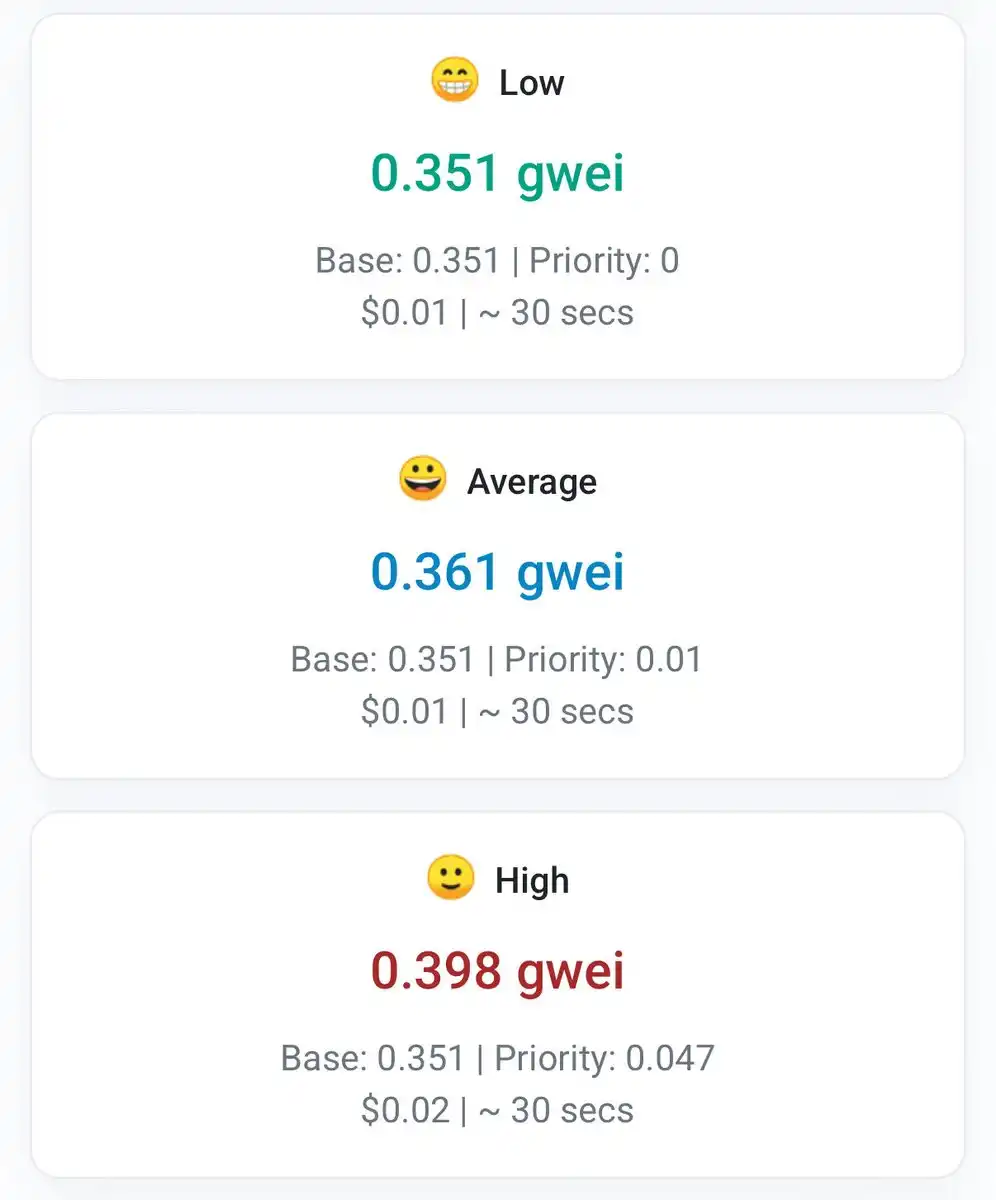
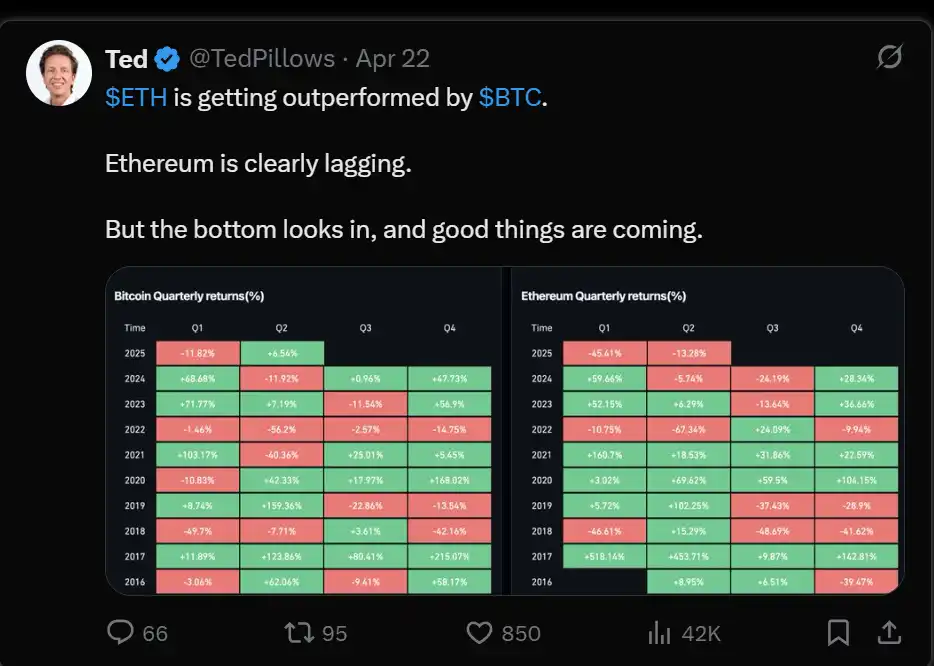
Ethereum has not seen a new all-time high in price in 2025, with the ETH/BTC exchange rate hitting a five-year low (0.02), and narratives of L2 and re-staking competition have not effectively boosted its value. At the same time, transaction fees have also dropped to the lowest level since 2020, with an average of only $0.36 per transaction.
With a surge in @solana users (daily active users reaching 3.25 million, while Ethereum is only at 410,000), daily transaction volume is far ahead (35.99 million transactions vs Ethereum's 1.13 million transactions), making many people curious: where will this world's second-largest chain go from here?
Two major upgrades that could reshape Ethereum's future
1. Upcoming Pectra Upgrade
2. Vitalik's proposal to use RISC-V technology to replace the existing EVM
Pectra Upgrade (Expected to launch on May 7, 2025)
The Pectra upgrade combines the two updates that were originally separate (the "Prague" for the execution layer and the "Electra" for the consensus layer) into a comprehensive upgrade, consisting of a total of 11 EIPs, with the goal of improving Ethereum's scalability, efficiency, and security.
Three Core Improvements of Pectra
1. Enhanced Scalability
Introducing PeerDAS and Verkle Trees technology, significantly enhancing transaction processing capability
Optimizing data storage to reduce node operating costs
Hash tree technology speeds up network synchronization
2. Lower Transaction Costs
Reduced network congestion is expected to lead to a substantial decrease in Gas fees
EIP-7702 enables account abstraction, allowing users to pay Gas with stablecoins rather than just ETH
Batch transactions and custom security features improve wallet experience
3. Enhanced Staking Mechanism
EIP-7251 increases the maximum staking amount for each validator from 32 ETH to 2048 ETH, promoting institutional participation and reducing operating costs
EIP-6110 migrates staking processing for validators to the execution layer, reducing validator activation time by approximately 48 hours
RISC-V Proposal (Long-Term Disruption?)
Vitalik recently proposed a more radical idea: replacing the Ethereum Virtual Machine (EVM) with RISC-V technology, which would fundamentally change how Ethereum executes smart contracts.
What is RISC-V?
RISC-V is an open-source Instruction Set Architecture (basically the language that tells a processor how to execute commands).
Unlike Ethereum's exclusive EVM, RISC-V's advantages include:
Fully open-source and free
Widely used in mainstream computing hardware
More suitable for complex computations
More friendly to zero-knowledge proof (zk) technology
Why Replace EVM?
1. Substantial Performance Improvement:
RISC-V is expected to increase execution efficiency by 100 times.
Transaction fees will significantly decrease.
Private transactions and cross-chain functionality will become more feasible.
2. Better Support for ZK Technology:
The current zkEVM system must first convert EVM instructions to RISC-V before generating zero-knowledge proofs, resulting in a computation burden 100 to 1000 times heavier.
Native support for RISC-V will bypass this conversion step.
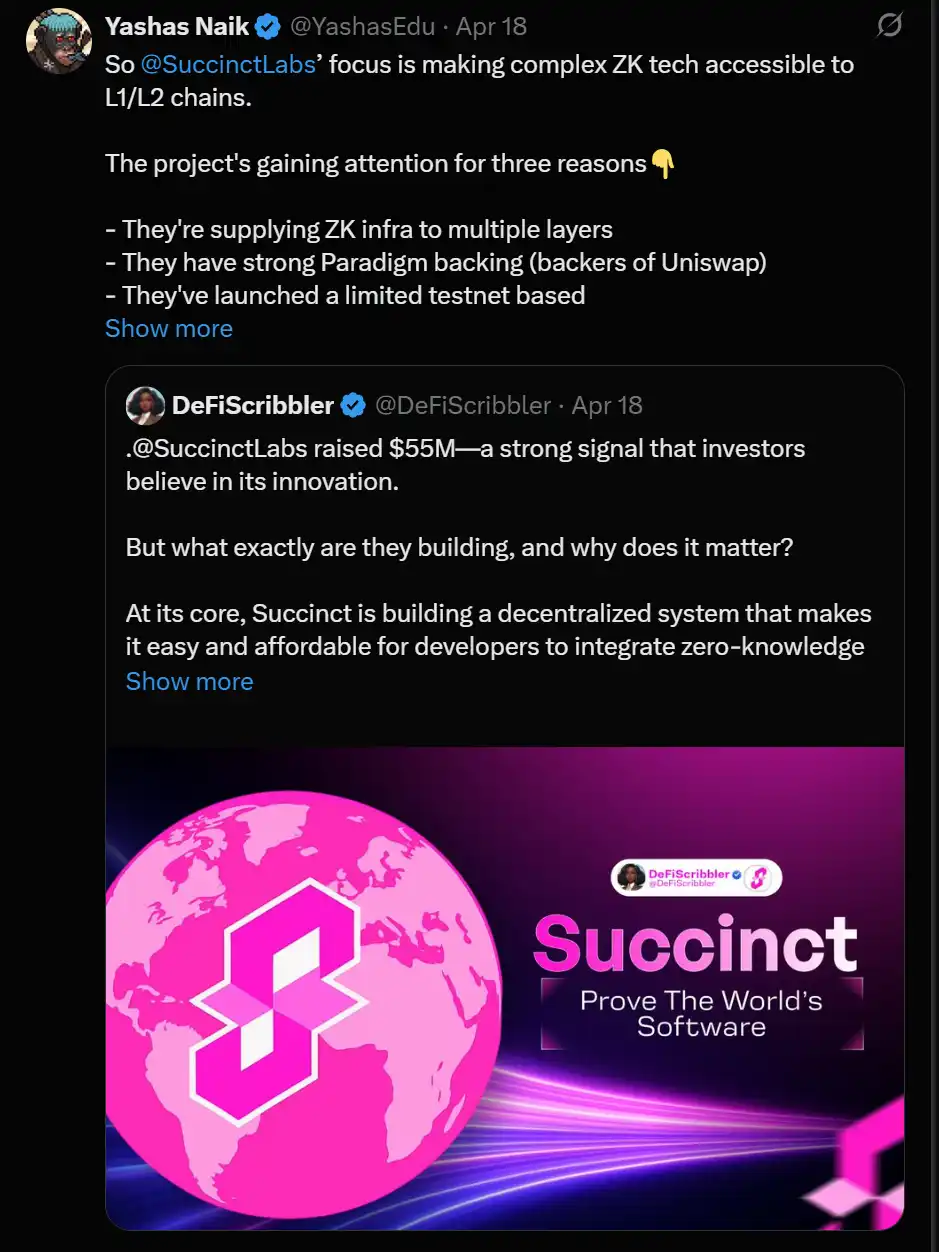
For example, @SuccinctLabs' zkVM (SP1) can directly run smart contracts using RISC-V.
Summary: In the current context where L2 narratives and re-staking fervor have failed to drive ETH performance, the Pectra upgrade and RISC-V plan may be Ethereum's new "breakthrough" key points. The former is a practical update for short-term efficiency improvements and fee reductions, while the latter is a long-term revolution of the underlying structure of smart contracts.
3. Developer Continuity:
Developers can still use Solidity or Vyper to write smart contracts
These languages only need to target RISC-V as a new backend
The user experience will see almost no significant changes
4. Implementation Timeline:
This is not an immediate implementation change. Vitalik's proposal represents a long-term vision, expected to:
Be gradually implemented, taking approximately 2-3 years
Maintain the old system (EVM interpreter) during the transition period
Ultimately make Ethereum competitive with efficient chains like Solana and Monad
What Does This Mean for Ethereum's Future?
Ethereum is facing a survival challenge: while maintaining its leading position as the primary smart contract platform, it must address the performance bottlenecks that some emerging blockchains have successfully overcome.
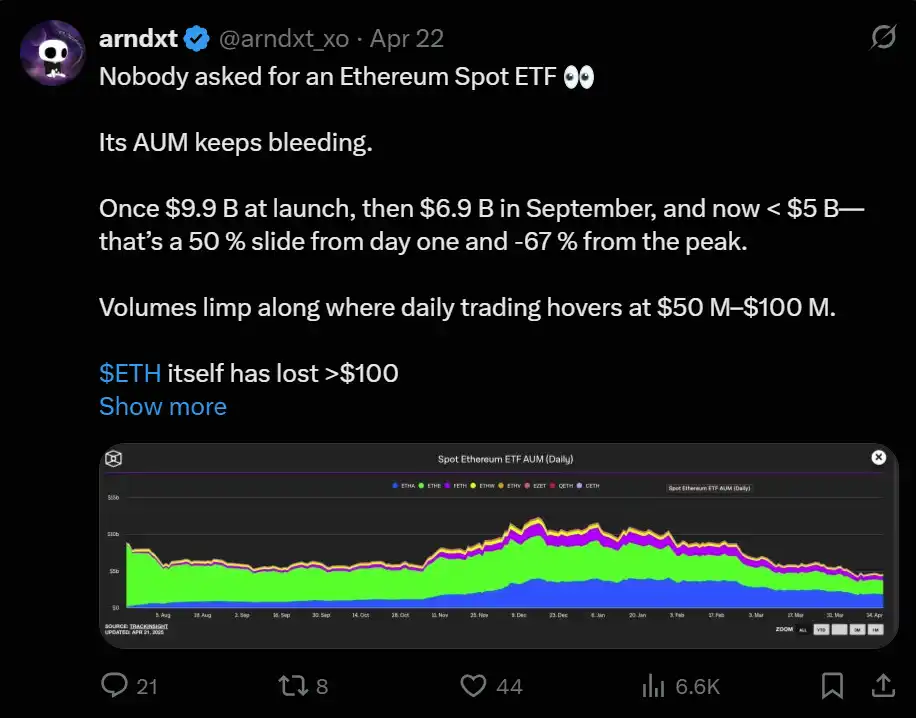
The Pectra upgrade addresses the urgent issues in staking, transaction costs, and user experience, while the RISC-V proposal focuses on Ethereum's fundamental execution architecture, aiming to provide a technical foundation for competing with faster public chains while retaining its security and decentralized advantages.
For users, these changes ultimately mean
Increased transaction processing speed
Lower fees
More possibilities for new applications (such as on-chain AI, privacy features)
Better scalability without sacrificing security
By advancing performance enhancement plans while preserving compatibility with existing applications, Ethereum is attempting to evolve without abandoning its core principles and ecosystem.
However, whether these changes are enough to maintain its market position in the face of faster-growing competitors remains to be seen.
If not Ethereum, then who? The latest data shows that the competitive landscape is undergoing significant changes. While the top ten DeFi protocols still operate on Ethereum, we have also seen warning signals of its diminishing lead.
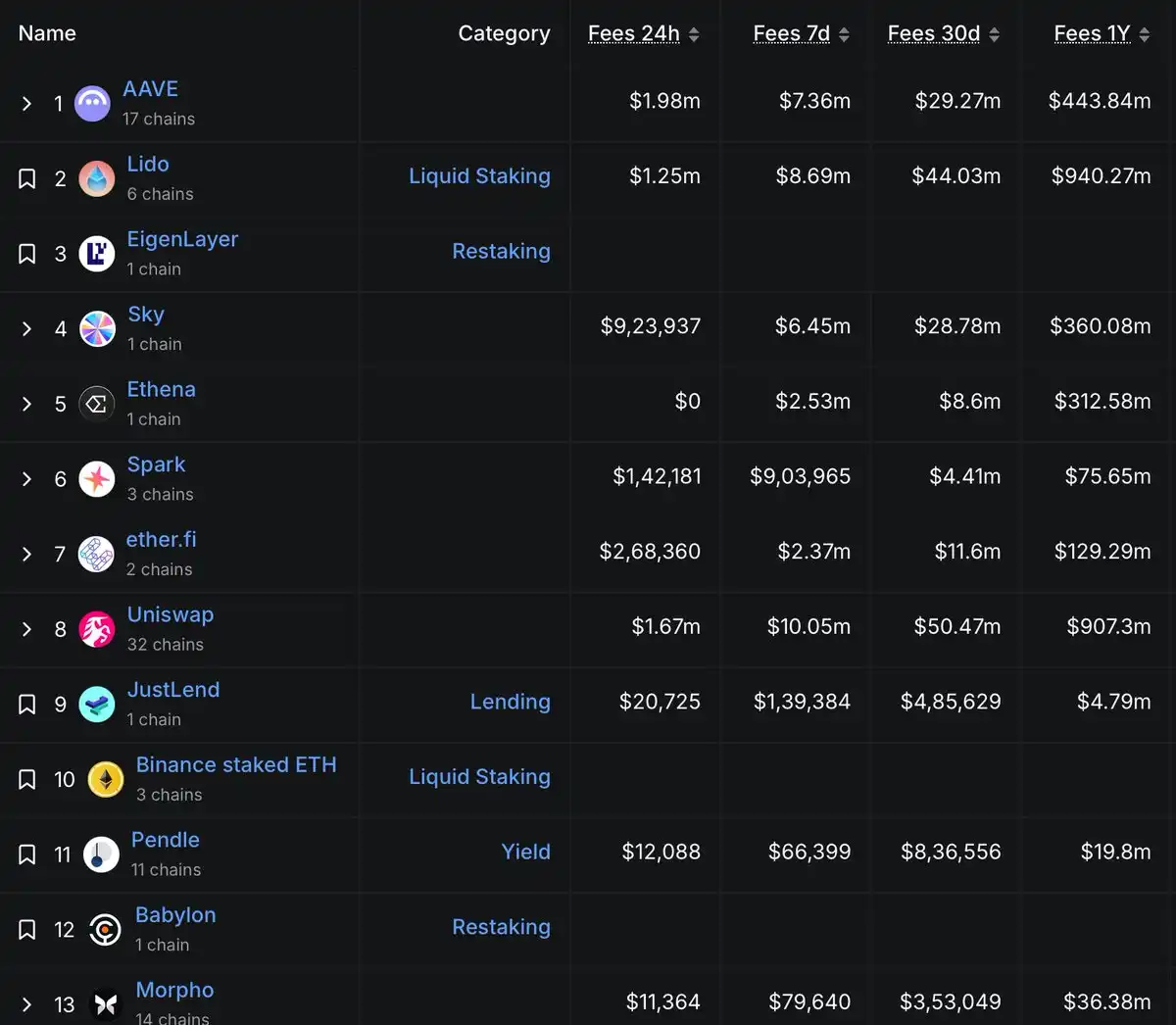
Projects like @jito_sol and @JupiterExchange are rapidly growing on other chains, and @convergeonchain (Ethena's RWA public chain) has completely moved away from the Ethereum ecosystem. These dynamics indicate that Ethereum's leading position is not set in stone, raising a key question.
What future technological breakthroughs does Ethereum need to maintain its competitiveness?
According to @nansen_ai's data, Solana recently surpassed Ethereum in total staked value (a significant milestone for the SOL ecosystem), indicating that institutions' confidence in Solana's staking infrastructure is rapidly growing.
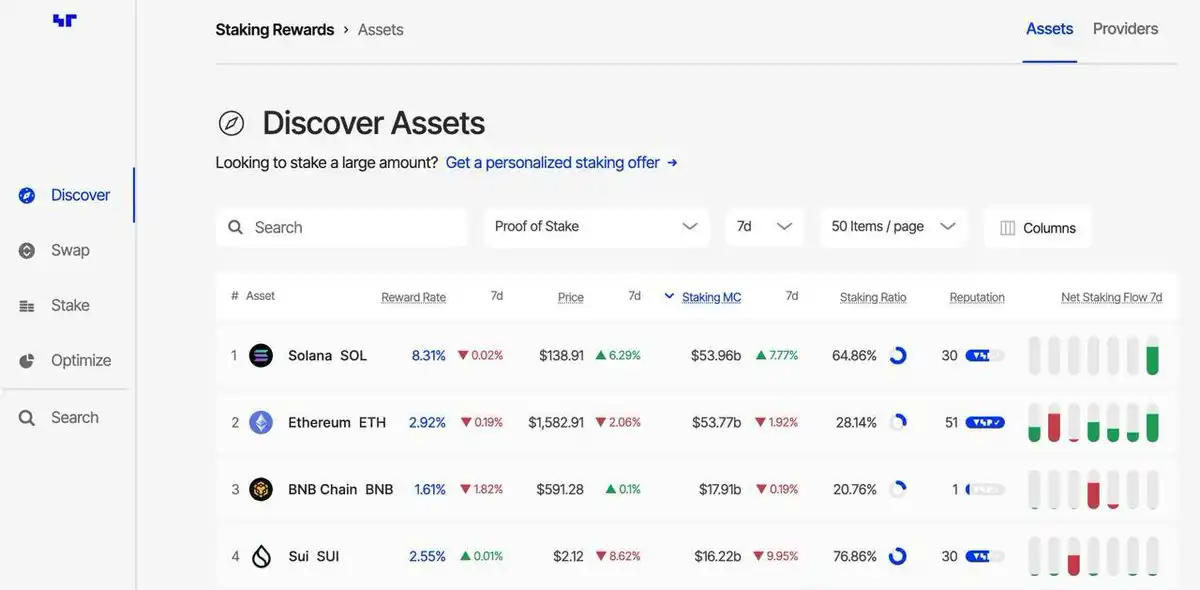
At the same time, Solana outperformed all other blockchains in first-quarter 2025 revenue performance while still maintaining extremely low transaction fees. This combination of "high revenue + low user cost" showcases Solana's efficient economic model.
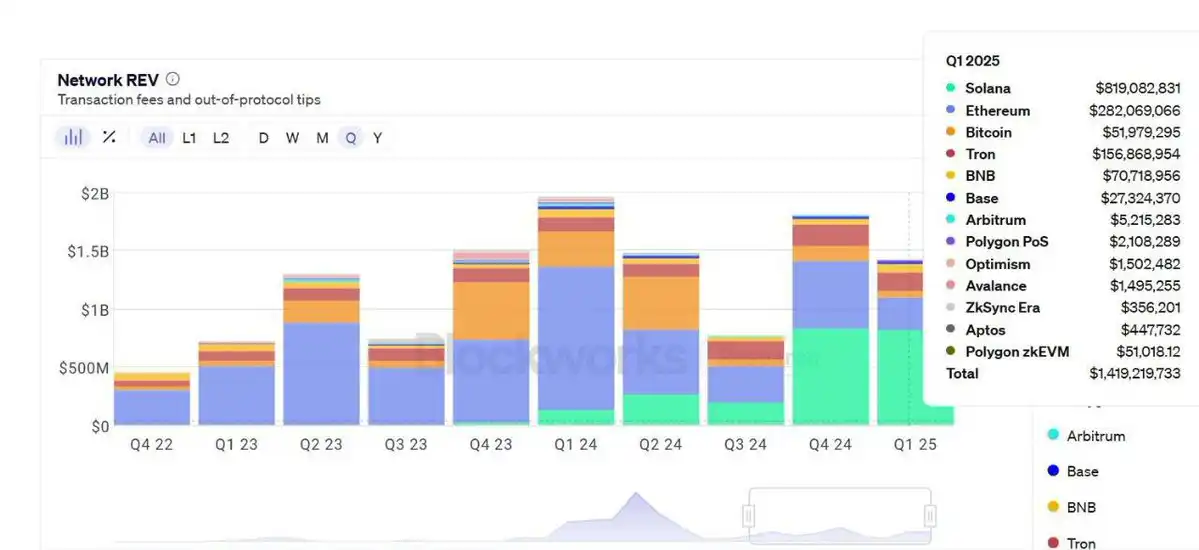
These advancements undoubtedly put greater pressure on Ethereum's technological roadmap. Despite the Pectra upgrade and the potential RISC-V transition aimed at addressing Ethereum's scalability and cost issues, Solana, with its current architecture, continues to attract market attention and share.
Source: Original Article Link
You may also like
Why Is Bitcoin Lagging Stocks in 2026? AI Stocks, ETF Outflows, and the Nasdaq Rally Explained
Morning Report | Samsung announces a 265.5 trillion won investment plan, focusing on semiconductor and AI computing power data centers; Vitalik publishes an article detailing the entire technology tree behind the confusion protocol (iO) mainline
What you bought on CEX is really not US stocks: Analyzing the 94% liquidation monopoly and the evaporation of equity under a five-layer pipeline
In such a crowded cross-border payment arena, where is the next stop for the future?
Why Is Bitcoin Down in 2026? What We Can Learn From 2022
The large models in the United States are moving towards closure in the name of security
From the white-haired stock god to the billionaire fund mogul, the smart people shorting Nvidia are all getting rich using the same framework
Morning Report | CoinEx becomes a key hub for Iran to evade sanctions, involving over $3.8 billion in funds; Kalshi seeks a new round of financing, with a valuation potentially rising to $40 billion
Global Launch: As predictions become the most scarce asset in the AI era, Manadia is defining the next generation of the value internet
Why do cryptocurrency projects always like to change their names?
Who is footing the bill for the $64 billion accounting frenzy?
I never expected that the first application of AI x Crypto would be in security auditing
What is your view on Binance's competitive advantages?
ETH has entered a non-consensus phase, and the turning point is approaching!
The shift in the cloud of the air: from despising stablecoins a year ago to the high-profile entry of capital today
The survival dilemma of small and medium exchanges behind the withdrawal anomalies exposed by AscendEX
Why Is Bitcoin Falling Below $60K? 5 Key Market Drivers Explained
Bitcoin has dropped sharply amid ETF outflows, Strategy stock weakness, AI stock rallies, and changing Fed expectations. Explore the key forces driving BTC’s latest correction and what traders should watch next.
Bitcoin vs. Gold in 2026: Which Asset Performs Better in Different Markets?
Why Is Bitcoin Lagging Stocks in 2026? AI Stocks, ETF Outflows, and the Nasdaq Rally Explained
Morning Report | Samsung announces a 265.5 trillion won investment plan, focusing on semiconductor and AI computing power data centers; Vitalik publishes an article detailing the entire technology tree behind the confusion protocol (iO) mainline
What you bought on CEX is really not US stocks: Analyzing the 94% liquidation monopoly and the evaporation of equity under a five-layer pipeline
In such a crowded cross-border payment arena, where is the next stop for the future?
Why Is Bitcoin Down in 2026? What We Can Learn From 2022
The large models in the United States are moving towards closure in the name of security