
 Buy Crypto
- Markets
 Futures
- Spot
- Copy Trade
- Earn
- More
Binance Alpha Cools Off: User Count Drops 60%, Is Nobody Collecting "Eggs" Anymore?

Original Article Title: "Final Whistle? How's Binance Alpha Doing Lately?"
Original Article Author: Nicky, Foresight News
“Every generation has their own way of doing things, maybe our generation's way is Binance Alpha.” Binance Co-CEO He Yi said at the end of December 2025.
However, over time, according to data from the Alpha123 platform, the number of Binance Alpha users has dropped from nearly 500,000 in November 2025 to about 200,000 currently, a decline of over 60%.
At the same time, the overall earnings level has seen a significant decline. The once lucrative "farming" section, which had single-account monthly earnings of over $2000 in mid-2025, is no longer as prominent.
According to Alpha123 platform data, the current daily active users of Binance Alpha are around 203,000. As of January 28, this month has seen 18 airdrop rounds, with airdrop amounts ranging from 13,000 to 72,000, averaging about 33,000, which is approximately 16.2% of the daily average active users.
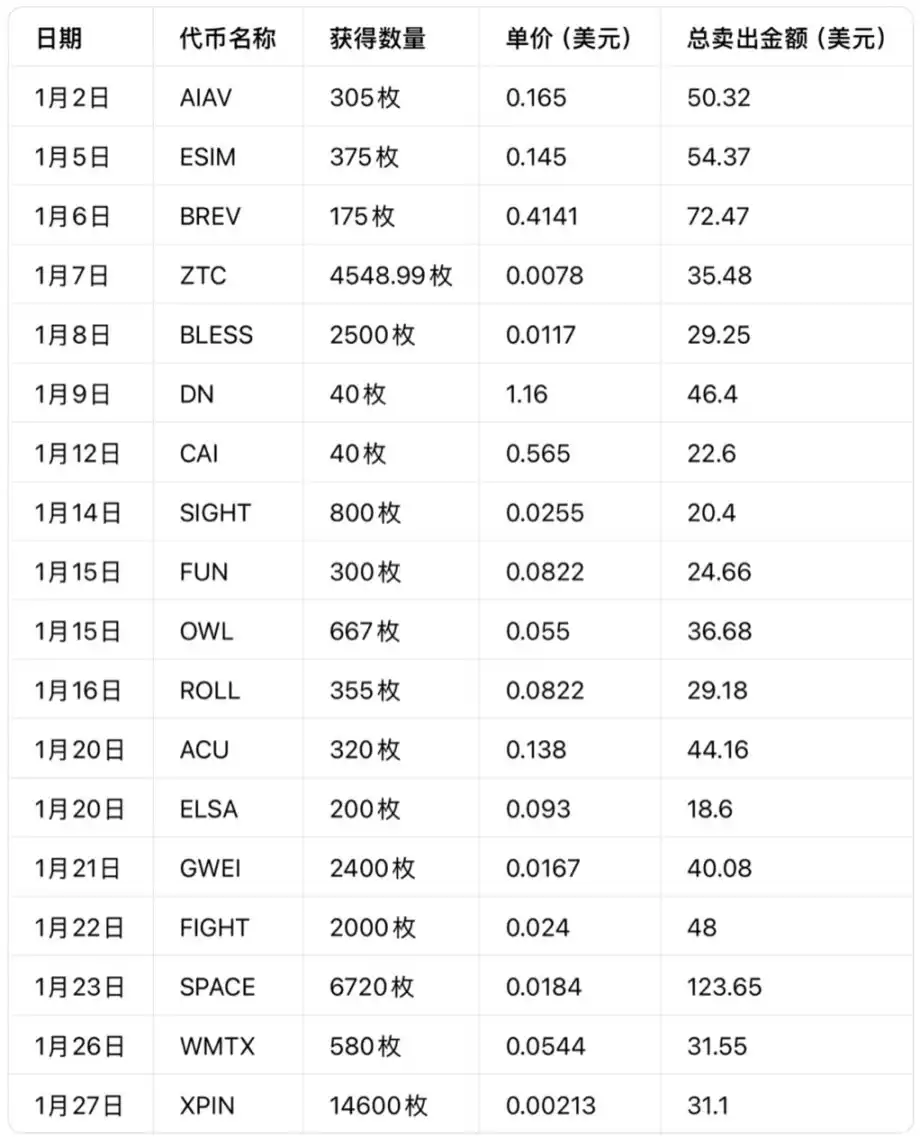
As of January 28, in this month's 18 rounds of Alpha, only 1 round had a single-session earnings exceeding $100, which was $123.65 for SPACE (price calculated based on the latest opening price 10 minutes after opening). Meanwhile, there were 14 rounds with earnings below $50, with the lowest being $18.6 for ELSA.
The minimum Alpha points threshold for this month is 230, reaching a maximum of 257 points. On January 26, the Alpha token WMTX had a threshold of 241 points for claiming, with a single-session earnings of only $31.55. If you earn 16 points daily, and since Alpha points refresh every 15 days, theoretically you can accumulate 240 points in 15 days, meaning that if the threshold exceeds 240 points, you won't be able to claim within a single round. For example, the 241 points required for WMTX means that solely relying on stable daily point accumulation won't meet the requirement within one round.
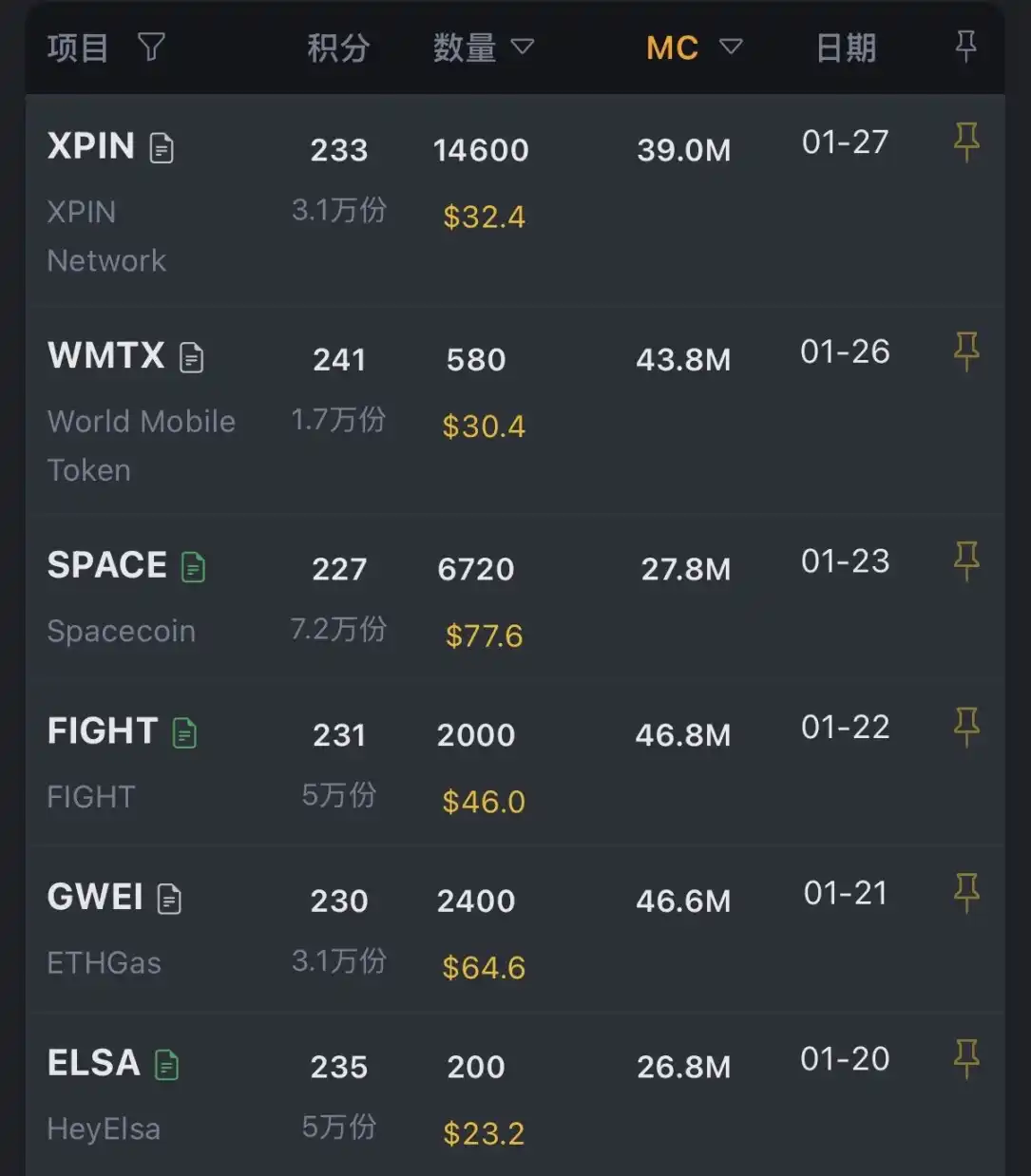
Comparing to the mid-2025 phase when a single account could earn close to $2000 in a month, the theoretical cumulative earnings from the first 18 rounds in January this year are about $715.70. This number is based on the premise of "reaching the points threshold in every round and successfully claiming the maximum number of times." If you earn 16 points daily, the actual maximum number of times you can claim is 5 times, with earnings around $261.43.
Take SPACE as an example, which had a previous period earnings of over 100 US dollars. The redemption threshold is 227 points, and each redemption requires 15 points. If a user automatically receives 1 point per day through the account balance, the remaining points need to be obtained through transactions. Based on the current points-to-volume ratio, obtaining 15 points requires completing around 32,700 US dollars in transaction volume. Assuming a mainstream participant conducts a single transaction of about 330 US dollars, this would require around 100 transactions per day.
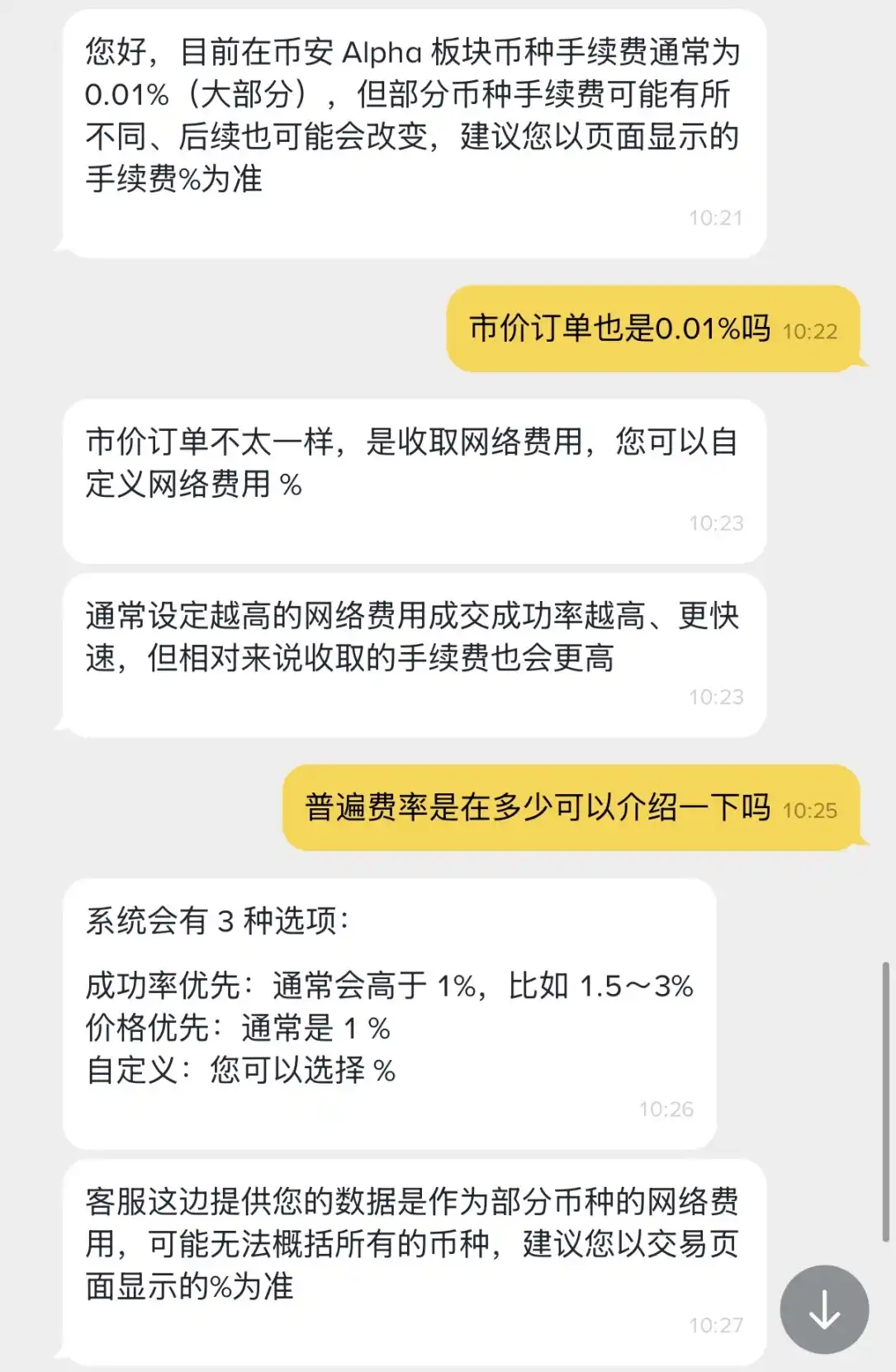
According to the author's research, the limit order fee rate in the Binance Alpha section is currently 0.01%, while the market order fee rate is usually 1%. If one were to generate a transaction volume of 32,700 US dollars through market orders, a minimum of 327 US dollars in fees would need to be paid daily, excluding price slippage. When trading Alpha section tokens in the Binance wallet, each transaction incurs a 0.01% service fee and a 0.01% trading fee, with a network fee of about 0.1 US dollars per transaction. With a daily transaction volume of 32,700 US dollars, approximately 17 US dollars in fees would need to be paid. If one were to continuously conduct transactions for 15 days to reach the minimum cost of 240 points, the total cost would be 255 US dollars, with each Alpha redemption requiring 15 points, equivalent to a cost of 17 US dollars.
To alleviate the transaction count pressure, the platform occasionally launches multiple points events, which have somewhat reduced the "transaction threshold" but have also magnified price risks. Under a 4x points mechanism, theoretically, only about 25 transactions per day at around 330 US dollars each would be needed to obtain 15 points. However, these types of tokens usually exhibit more significant price fluctuations, limited liquidity, and price slippage and short-term volatility that could rapidly erode potential gains.
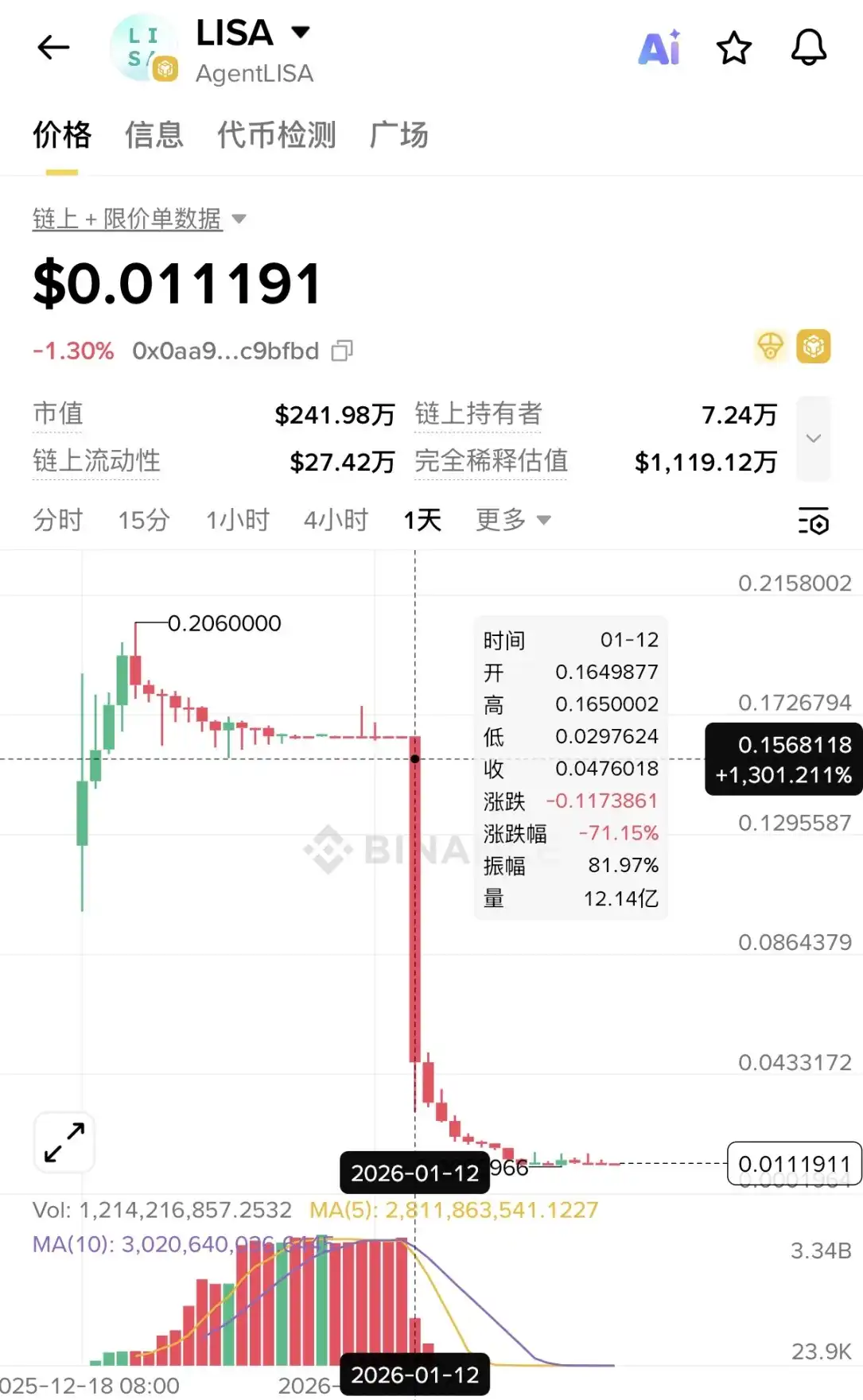
January 12th's LISA became a typical case. The token attracted a large amount of wash trading funds due to providing a 4x Alpha points incentive. However, intense sell-offs occurred within a short period that day, leading to a single-day maximum drop of over 80%. The significant price decline caused some users to incur trading losses far exceeding the airdrop value while obtaining points.
For users consistently participating in Alpha, the most direct issue often isn't "Can I still make money?" but rather "Is it worth continuing to trade."
Some early participants had previously received returns far above the average level on individual projects. For example, receiving 59.82 RIVER on September 19, 2025, would now be worth about 3,200 US dollars at current prices; receiving 644 MYX on May 6, 2025, would be worth around 3,870 US dollars at current prices. Selling at the historical peak would result in over 11,000 US dollars in profit.
However, this kind of "diamond in the rough" does not have stable replicability. In the current environment of single-period revenue contraction, increased entry barriers, and heightened volatility, most rounds are closer to small, dispersed, and uncertain returns. Users are more likely to focus on the overall input-output ratio rather than individual extreme revenue cases.
The Alpha mode is essentially exchanging real trading behavior for early project token distribution opportunities, and its sustainability depends on the continued emergence of projects with market performance. As the market as a whole enters a stock game stage, the number of high-quality projects is limited, while the size of participants continues to expand, diluting the expected returns that can be allocated to individual users.
At the same time, the core significance of Alpha in the early stage is to divert new projects, activate on-chain interactions, and enhance user frequency of Binance Wallet ecosystem usage. In the early high-reward stage, this goal has obviously been achieved, and Alpha has become an important source of user activity and trading volume.
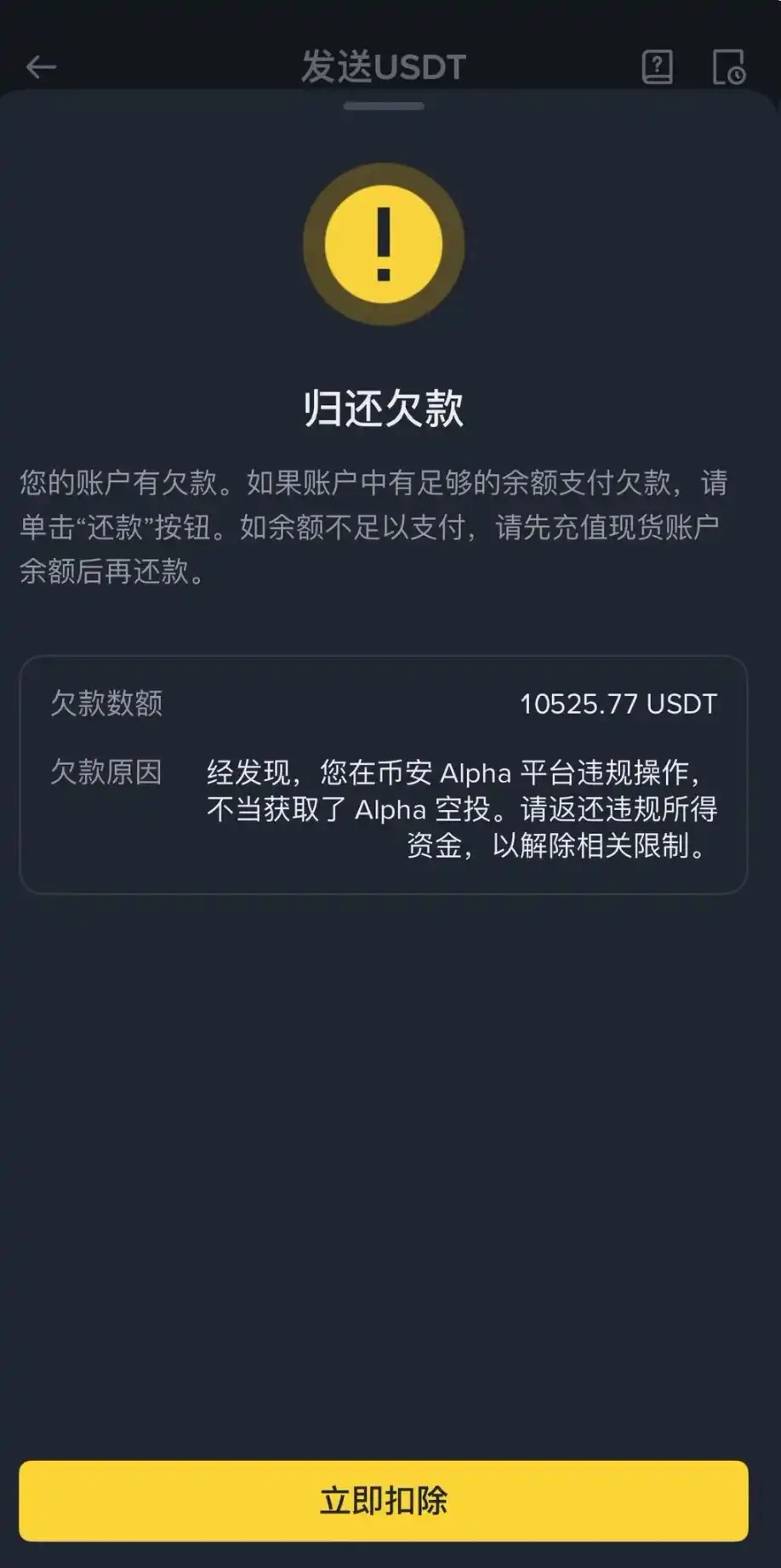
However, with the intensification of volume brushing behavior, studio batch operations, and high-frequency gaming, incentives are gradually being arbitraged. In November 2025, Binance took restrictive measures against some studio accounts identified as batch operations and requested the return of related profits. This move shows the platform's effort to compress the space for abnormal behavior, but the community still generally believes that automated tools have advantages in efficiency and cost control, putting ordinary manual users at gradually disadvantaged positions in the points competition. Some participants have provided feedback that in the current environment where points thresholds coexist with market volatility, continued participation not only yields unstable returns but may also incur net losses due to token price fluctuations caused by volume brushing, leading them to choose to reduce frequency or even exit.
For ordinary users, Alpha is no longer a channel where stable returns can be obtained simply by frequency but more like a strategic choice that requires careful calculation of costs and risks.
You may also like

The 17-Year Mystery Will Be Solved, Who is Satoshi Nakamoto?

5 Minutes to Make AI Your Second Brain

Uniswap is trapped in an innovation dilemma

What is the key to competition in crypto banking?

The flow of stablecoins and the spillover effects in the foreign exchange market

After two years, Hong Kong's first batch of stablecoin licenses finally issued: HSBC, Standard Chartered make the cut
The person who helped TAO rise by 90% has now single-handedly crashed the price again today

3-Minute Guide to Participating in the SpaceX IPO on Bitget

Top 5 Cryptos to Buy in 2026 Q1: A ChatGPT Deep Dive Analysis
Explore the top 5 cryptos to buy in Q1 2026 including BTC, ETH, SOL, TAO, and ONDO. See price outlooks, key narratives, and institutional catalysts shaping the next market move.

How to Earn $15,000 with Idle USDT Before Altcoin Season 2026
Wondering if altcoin season is coming in 2026? Get the latest market update, and learn how to turn your idle stablecoins waiting for entry into extra rewards up to 15,000 USDT.
Can You Win Joker Returns Without Large Trading Volume? 5 Mistakes New Players Make In WEEX Joker Returns Season 2
Can small traders win WEEX Joker Returns 2026 without huge volume? Yes—if you avoid these 5 costly mistakes. Learn how to maximize card draws, use Jokers wisely, and turn small deposits into 15,000 USDT rewards.

Altcoin Season 2026: 4 Stages to Profit (Before the Crowd FOMO In)
Altcoin Season 2026 is starting — discover the 4 key stages of capital rotation (from ETH to PEPE) and how to position before the peak. Learn which tokens will lead each phase and avoid missing the rally.

Will Alt season come in 2026? 5 Tips to Spot the Next 100x Crypto Opportunities
Will altcoin season arrive in 2026? Discover 5 rotation stages, early signals smart traders watch, and the key crypto sectors where the next 100x altcoin opportunities may emerge.

The bear market has arrived, and cryptocurrency ETF issuers are also getting involved

The richest man had a quarrel with his former boss

BTC Firm Above 70K! Saylor’s "Institutional Logic" vs. Moon’s "Retail Faith": Who is Really Harvesting the Market?
Bitcoin is holding firm above the $70,000 support level following a massive short squeeze that liquidated $427 million. As the "Four-Year Cycle" narrative shifts, the market is split: Michael Saylor’s cold, institutional "indiscriminate stacking" vs. Carl Moon’s high-energy retail "hopium." This article decodes these two polar-opposite strategies for the 2026 bull run and reveals how WEEX’s institutional-grade liquidity and AI trading tools empower every type of investor to convert market volatility into profit.

The Girl Who Created the SBTI Test: A Story of a Doomed Cyber Love, an E-Widow Ratfolk



 App
App